
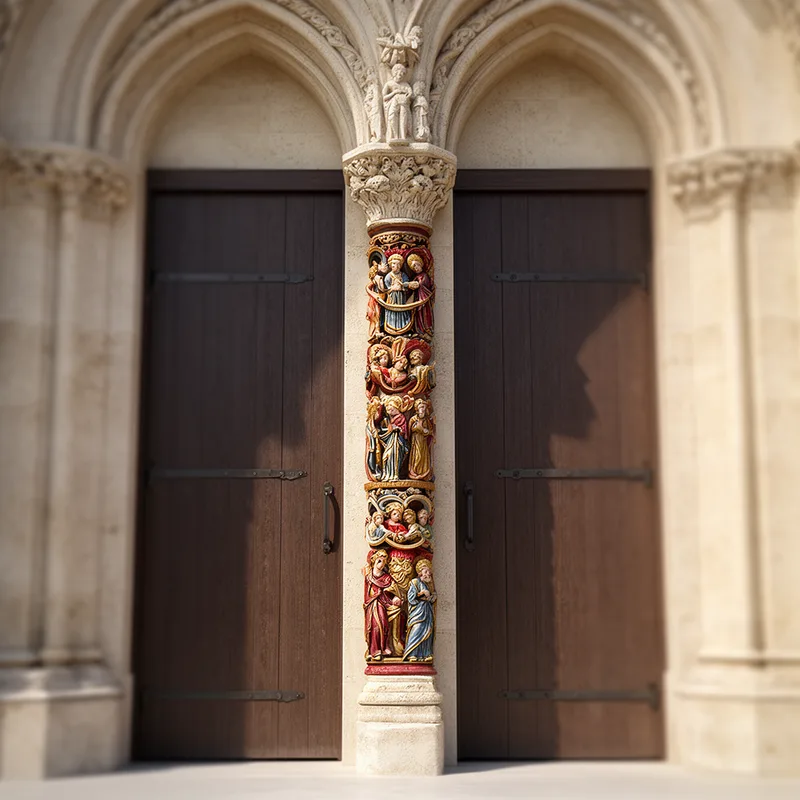
trumeau
- noun
- /truˈmoʊ/
- Specialized
- Visitors often admire the beautiful trumeau that stands between the grand doors of the cathedral.
Examples
-
The portal's original monolithic trumeau column (the current one is a nineteenth-century replacement) was quite possibly antique, since monolithic columns in medieval architecture are often, if not usually, antique spolia.
Academic text (2005) -
Likewise, the large block of fine Arudy limestone from which the portal's trumeau sculpture is carved is probably spolia.
Academic text (2005) -
For instance, modern noses were removed from the atlantes in the trumeau sculpture.
Academic text (2005) -
The two small lunettes or tympana above the doorways on either side of the trumeau are entirely modern, replacing originals on which the sculpture had been effaced.
Academic text (2005) -
The atlantes in the trumeau socle, a number of the occupations depicted in the first archivolt, some of the Elders, and the two soldiers depicted in the spandrels on either side of the portal arch all survive intact and largely or entirely unrestored.
Academic text (2005) -
The intricate carvings on the trumeau of the church entrance tell a fascinating story about the region's history.
-
In medieval architecture, the trumeau served as an important visual focal point, often adorned with religious imagery.
How Ornate


Surface Forms
Etymology
The word trumeau comes from French and used to mean the central post or pillar between two doors, often carved with people or scenes. So think of a carved figure standing in the middle of a doorway to remember the decorated pillar at a church entrance.