

true jasmine
- noun
- /tru ˈdʒæz.mɪn/
- She added dried true jasmine flowers to her tea for a delicate aroma.
Examples
-
The garden was filled with the scent of true jasmine blooming along the old stone wall.
-
Perfume brands often highlight true jasmine as a luxurious ingredient in their fragrances.
-
I love the scent of true jasmine!
-
The true jasmine blooms beautifully in the summer.
-
Perfume brands often highlight true jasmine as a luxurious ingredient in their fragrances.
-
She added dried true jasmine flowers to her tea for a delicate aroma.
-
The garden was filled with the scent of true jasmine blooming along the old stone wall.
Synonyms
 51
2.7
51
2.7

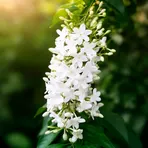
A plant with small white or yellow flowers that smell sweet


 1
9.9
1
9.9
A climbing shrub with sweet-smelling white, yellow, or red flowers used for perfume and tea

A climbing shrub with sweet white flowers people use in perfume and tea

A climbing shrub with fragrant white flowers often used to scent tea
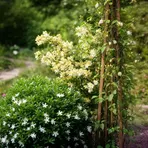
A group of plants like jasmine that grow as shrubs or climbing plants
Surface Forms
Morphology
The meaning is directly compositional: 'true' (genuine) modifies 'jasmine' (the fragrant plant), so a learner who knows both words can infer it refers to the genuine/authentic jasmine plant or species. This follows a standard adjective + noun pattern and is cross-linguistically regular, not idiomatic or metaphorical.
Etymology
True jasmine got its name to show it was the 'real' jasmine people used for 'perfume' and 'tea'. Picture a climbing shrub with sweet white flowers that smell very strong, and because people used those flowers to make scents and to flavor tea, the name helps you remember the plant's special scent and use.