
tropopause
 1
9.9

- noun
- /ˈtrōpəˌpɔz/
- Specialized
- Pilots need to be aware of the tropopause, which typically sits at around 10 kilometers above ground level.
Examples
-
When we hit 35,000 feet, we'll have reached the tropopause... the great belt of calm air.
-
The tropopause, at -55 °C, is typically the coolest region of the lower atmosphere, and this is also the normal upper limit of rising condensing convection.
Blog text (21) -
Flight levels should be kept below the tropopause, which, on average, is about 9 kilometers above sea level.
Academic text (1991) -
Energy drives change; it's why the coldest place in the world is at the tropopause above the equator.
Blog text (32) -
For example, during winter, the tropopause is about 8 kilometers above sea level in the northern latitudes and about 18 kilometers above sea level over tropical regions.
Academic text (1991) -
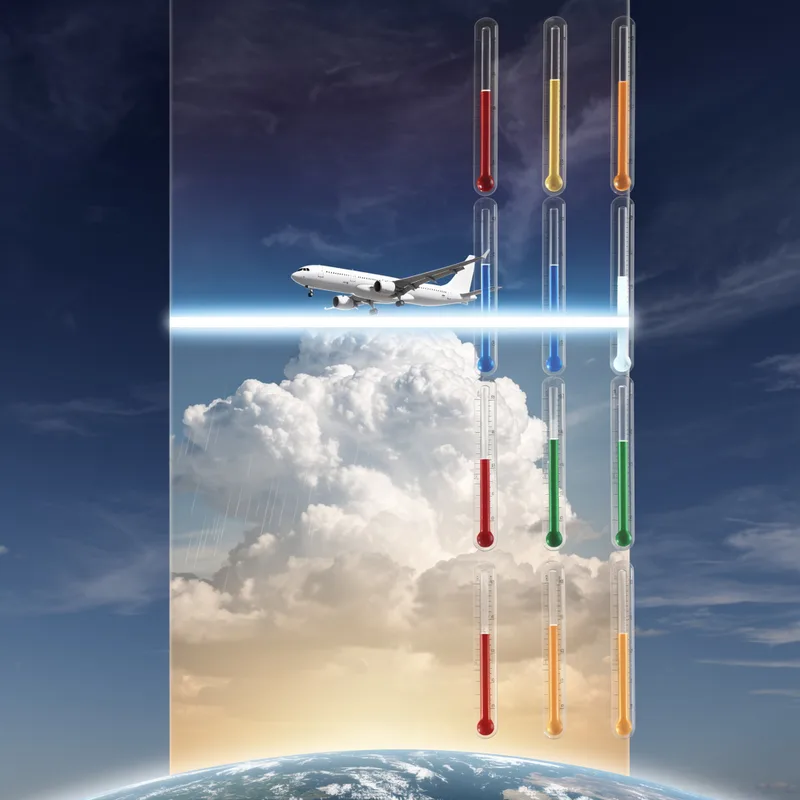
The tropopause is the altitudinal border, or line, that divides the troposphere and the stratosphere.
Academic text (1991) -
The tropopause marks the boundary where the temperature begins to change from decreasing to increasing in the atmosphere.
-
Meteorologists study the tropopause to understand weather patterns and atmospheric conditions.
Surface Forms
Morphology
tropopause = troposphere + pause (opaque) = tropo + pause
The meaning of 'tropopause' is not directly derivable from 'troposphere' and 'pause' without specialized knowledge of atmospheric science.
Etymology
Tropopause comes from tropo-, the same root in troposphere that means 'change' (where weather happens), and pause, which means 'stop'. So the tropopause is the place where the usual temperature change with height 'stops', marking the top of most weather.