
trophically
- adverb
- /ˈtroʊfɪkli/
- Specialized
- Herring and sand lance apparently exploit similar prey and fill similar niches trophically.
Examples
-
The other four fish that may co-occur with lake trout and/or arctic char are trophically distinct.
Academic text (1999) -
They are relatively large regions on the order of 200,000 km or greater, characterized by distinct bathymetry, hydrography, productivity, and trophically dependent populations.
Academic text (2005) -
-- Crait JR, Ben-David M. 2007. Effects of river otter activity on terrestrial plants in trophically altered Yellowstone Lake. Ecology 88: 1040-1052.
Academic text (2009) -
LMEs are "relatively large regions on the order of 200,000 km or greater, characterized by distinct: (1) bathymetry, (2) hydrography, (3) productivity, and (4) trophically dependent populations" (www.lme.noaa.gov/Portal/).
Academic text (2007) -
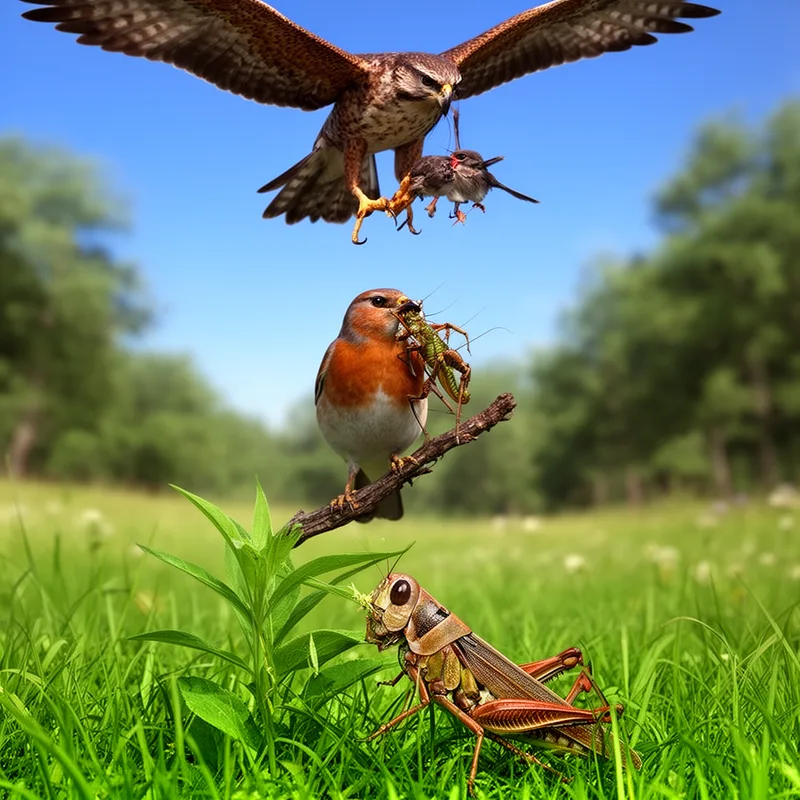
In a trophically balanced ecosystem, the plants and animals depend on each other for survival.
-
The study examined how predator and prey species interact trophically within the food web.
-
Understanding trophically related species helps ecologists predict changes in ecosystem dynamics.
Synonyms


 1
6.5
In a way that relates to a person's diet and eating habits
Surface Forms
Morphology
Etymology
The word trophically comes from the Greek root troph- meaning 'nourish' or 'feed'. So when species are trophically linked, they are connected by who eats whom in a food chain or food web.