
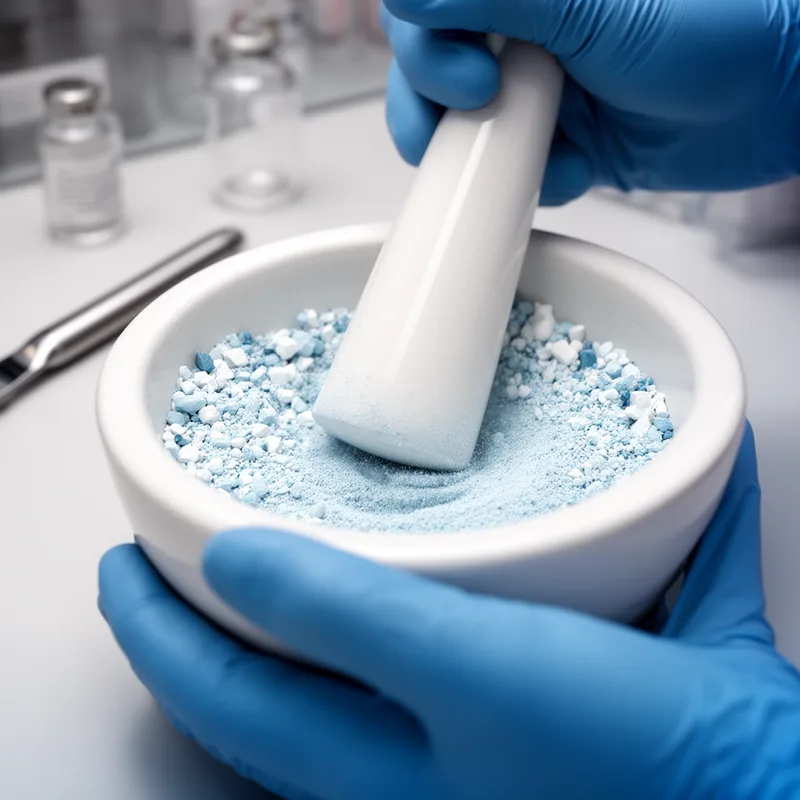
trituration
- noun
- /ˌtrɪtʃʊˈreɪʃən/
- Specialized
- The laboratory technician demonstrated the trituration process, carefully breaking down the sample for analysis.
Examples
-
The scientist observed the trituration of the powder, ensuring it mixed evenly with the solvent.
-
Nerves were digested for a total of 20 min at 37°C with trituration after 10 min.
Academic text (2017) -
After the initial grinding, the trituration of the herb continued until it reached a fine consistency.
Synonyms
 18
3.4
18
3.4

A process that grinds something into a fine powder
 5
2.5
5
2.5
The act of crushing something into small pieces or powder

 1
9.9
1
9.9
The act of breaking something into many small pieces by crushing or grinding

A process that crushes or grinds something into a fine powder
How Thorough

Surface Forms
Morphology
trituration = triturate (semi-transparent) = tritur + ation
Formed from the verb 'triturate' with the noun-forming suffix '-ation'; the morphological process is regular but the base is technical and uncommon for learners.
Etymology
Trituration comes from the Latin root trit- meaning 'to rub' or 'wear', the same root as the English word trite ('worn'). So trituration means the process of rubbing or grinding a material down into a fine, even powder.