
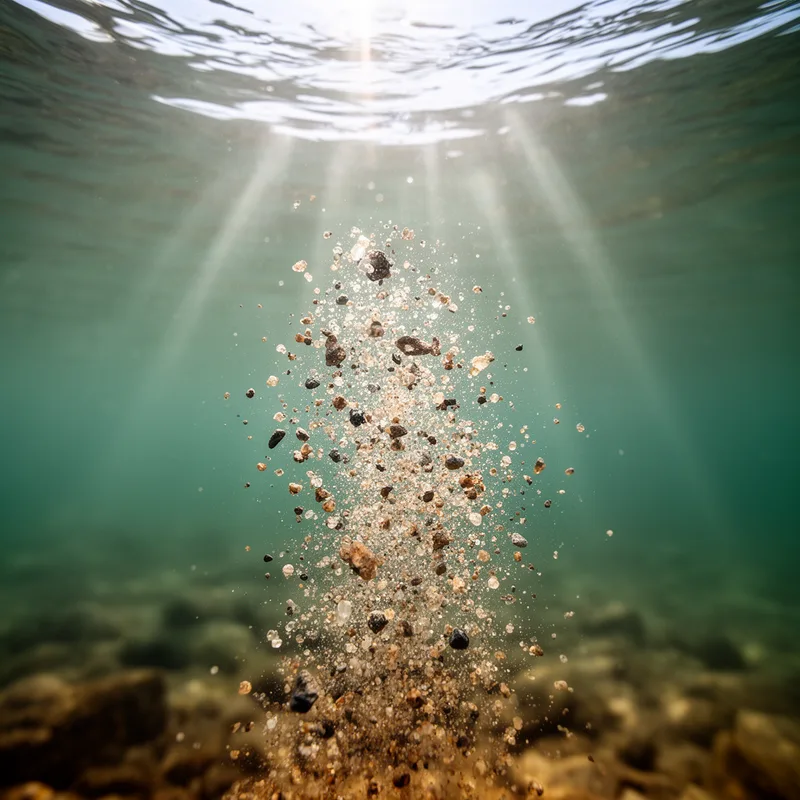
tripton
- noun
- Specialized
- The presence of tripton in the lake can affect water clarity and light penetration.
Examples
-
Unlike plankton, tripton consists entirely of inorganic particles suspended in the water column.
-
The analysis showed that the tripton in the sea was primarily composed of quartz and clay particles.
-
Samples revealed a high concentration of tripton following the heavy rainfall.
-
The lake was clear, but there was some tripton visible near the shore.
-
Scientists study triptons to understand water quality better.
-
Researchers observed large amounts of tripton accumulating in the shallow waters after the storm.
-
High levels of tripton can lead to reduced oxygen levels in aquatic ecosystems.
Synonyms

 23
7.5

A tiny bit of matter in air or water that is often harmful
 17
3.7
Fine soil left by moving water in a river or harbor
 4
5.1
Tiny solid or liquid pieces in the air that can harm health
Surface Forms
Etymology
Tripton was formed like plankton and uses the familiar ending -ton, and a helpful way to remember it is to think of that ending as naming small things that float in water. So tripton means the tiny inorganic 'bits' or mineral particles that stay suspended in lakes and seas.