
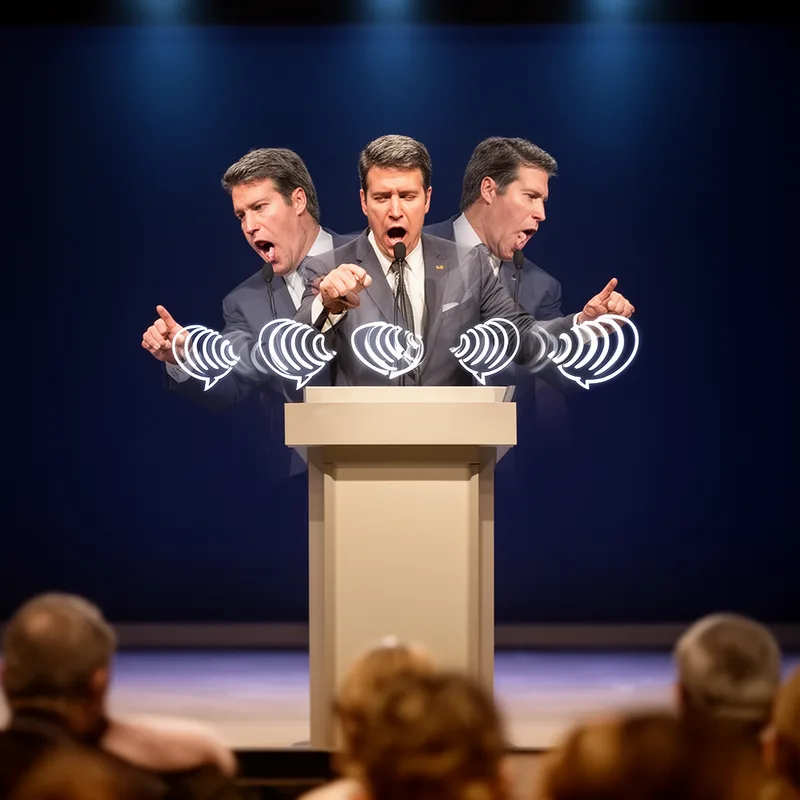
triplication
- noun
- /ˌtraɪpəˈleɪʃən/
- Literature
- The poet used triplication to emphasize her main theme.
Examples
-
The politician's speech used triplication to make his message more memorable.
-
Writers often employ triplication for dramatic or persuasive effect in their work.
-
In her presentation, she relied on triplication to highlight the importance of the main point.
-
In his speech, he employed triplication for dramatic effect.
-
In his speech, the lecturer effectively used triplication to reinforce his key arguments.
-
Authors frequently use triplication in their writing to make their messages more impactful.
-
The coach emphasized the importance of teamwork by employing triplication during his talk.
Synonyms

 10
3.2
10
3.2

Using the same word or phrase to make a point stronger and create a rhythm
 3
4.9
3
4.9
An action of saying or doing the same thing again to make it clear and show its importance
 1
1.8
1
1.8
Doing something again to practice or make it clear

A quick repeat of a word to add emphasis

Repeating a word or short phrase immediately to make it stronger

Repeating a word or short phrase in a sentence to add emphasis
How Many

Surface Forms
Morphology
triplication = triplicate (transparent) = tri + plic + ation
Formed by adding the nominalizing suffix '-ation' to the base 'triplicate', preserving the sense of 'threefold' or 'three copies'.
Etymology
Triplication comes from the parts tri- 'three' and plicare 'to fold', the same root behind common words like triple and duplicate. Think of it as folding an idea into three parts by saying it three times, so triplication means repeating a word or phrase three times for effect.