

tree tobacco
- noun
- /tri təˈbækoʊ/
- US
- Farmers are careful to fence off pastures where tree tobacco grows, as it can poison their cattle.
Examples
-
Tree tobacco has yellow flowers and grows rapidly by roadsides throughout the Southwest.
-
The tree tobacco plant thrives in warm climates.
-
Although native to South America, tree tobacco has become common in parts of California.
-
Farmers should be cautious of tree tobacco around livestock.
-
Tree tobacco grows along desert roads and produces striking yellow flowers that attract pollinators.
-
In California, tree tobacco is often found in disturbed areas and can spread quickly across the landscape.
-
Livestock can suffer from health issues if they consume tree tobacco due to its toxic leaves.
Synonyms
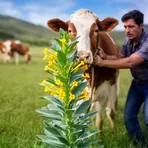
A green shrub from South America with yellow flowers that is poisonous to livestock

An evergreen shrub from South America whose leaves can poison farm animals
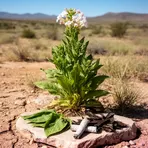
A wild plant from South America and Mexico with leaves used for smoking and not usually grown for sale
Surface Forms
Morphology
This is a straightforward noun–noun compound: 'tree' modifies 'tobacco' to indicate a tobacco-like plant that is tree-shaped or tree-sized. Such plant-naming compounds are compositional and cross-linguistically common, so a B1 learner who knows 'tree' and 'tobacco' would readily infer the basic meaning.
Etymology
Tree tobacco may get its name because the plant looks like a small tree and its leaves look like tobacco. Because the leaves can poison animals, the name now refers to this common poisonous shrub.

