

tree line
 9
5.1
9
5.1

- noun
- /tri laɪn/
- The tree line marks the elevation above which trees cannot survive due to the cold climate.
- just below the tree line
- ridge above the tree line
- reaches the tree line
Examples
-
What nobody talks about here is the irrefutable fact that we are at an altitude of 12,800 feet which means we are above the natural tree line.
-
When the sun falls behind the tree line, I predict it will become very dark, very quickly.
-
We need to get below tree line before dark.
-
We can make it if we head to the tree line.
-
We need to get to the tree line.
-
Best place to go is out of the wind, over by the tree line.
-
Once he made the main road, he would follow it just inside the tree line.
Fiction book (1995) -
I'm standing at the tree line looking into the woods, not seeing a thing.
Fiction book (1994) -
The ruins are all below the tree line and don't stick up out of the forest.
Fiction book (1999) -
Abruptly on leaving the hut, we found ourselves above the tree line.
Fiction book (1999)
Synonyms
 1
7.2
1
7.2
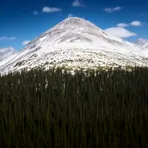
A line on a mountain or in cold regions that marks the highest place trees can grow
 1
4.0
1
4.0
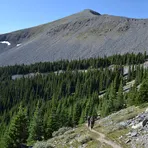
The highest or most northern place where trees grow

A high place on a mountain above which trees cannot grow because it is too cold
Surface Forms
Morphology
The meaning is directly derivable from combining 'tree' (the vegetation) with 'line' (a boundary or dividing mark): it denotes the boundary above which trees do not grow. This compound sense (treeline/timberline) is compositional and cross-linguistically common, so a B1 learner who knows both constituents should be able to infer the meaning.
Etymology
Tree line comes from the clear edge you see on mountains where the tall trees stop and form a visible line against rock or snow. So tree line now means the point or height above which trees cannot grow, the place where the forest ends.