
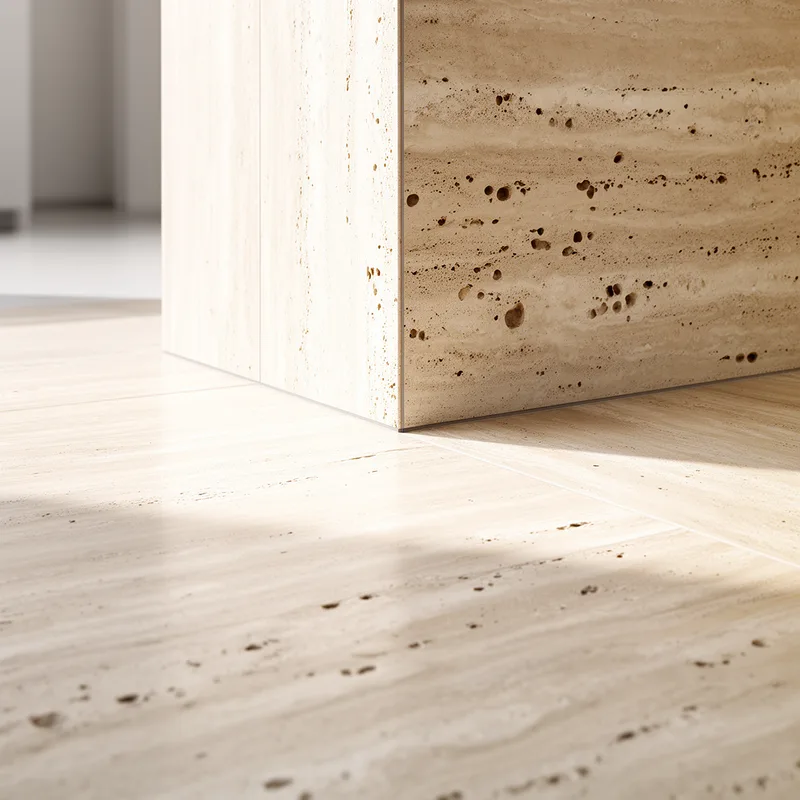
travertine
 1
7.4
1
7.4

- noun
- /ˈtrævərˌtiːn/
- Specialized
- Lining the nave were twenty Corinthian pilasters supported on travertine bases.
- travertine stone
- tuff and travertine
- travertine and marble
Loading YouTube…
Watch on YouTubeIn Karnak, there's a famous travertine block.
- In Karnak, there's a famous travertine block.
Examples
-
The new restaurant has beautiful walls made of travertine, creating a warm and inviting atmosphere.
-
First, I see the metal gas tank rolling back and forth on the silver travertine marble floor.
Fiction book (1994) -
The structure was reinforced and clad with travertine.
Academic text (2007) -
The main room is about 80 feet across, and it's magnificent... with nearly ten pillars... made entirely of travertine marble.
-
The white line of stone in the remains of the boundary wall is travertine, a sedimentary stone also quarried locally, which looks much like marble.
Academic text (2007) -
The parent company manufactures stone, tile, and slabs of onyx, marble, limestone, and travertine.
Blog text (20) -
The builders of ancient Rome clad soft, porous volcanic tuff with harder travertine and marble, creating enduring, majestic structures out of local materials.
Academic text (2007) -
The hotel lobby features stunning travertine floors that add an elegant touch to the space.
-
For their home renovation, they chose travertine tile for the kitchen backsplash because of its unique texture.
Synonyms

A soft porous rock formed when spring water rich in calcium leaves mineral layers
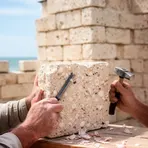
A soft stone made of broken shells that builders use for walls
Surface Forms
Etymology
The word travertine comes from Italian travertino, from the Latin tiburtinus, which means 'of Tivoli', a town near Rome known for its hot springs and the pale stone the Romans used. That's why travertine today names a light limestone full of small holes that has long been used for building and floors.