

transgressive
- adjective
- /trænˈɡrɛsɪv/
- Specialized
- The transgressive layers of sediment reveal ancient marine environments.
Examples
-
The transgressive layers in the rock record indicate a period of rising sea levels.
-
A transgressive event can result in marine fossils being found far inland.
-
Scientists studied the transgressive sequence to understand ancient climate changes.
-
Geologists study transgressive deposits to understand past climate changes.
-
The transgressive layers in the rock record indicate a period of rising sea levels.
-
Geologists study the transgressive sediments to uncover evidence of past marine environments.
-
A transgressive event can be identified by marine deposits on previously dry land.
Synonyms
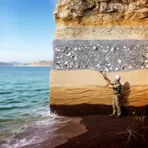
About a time when the sea moves over land and leaves layers of rock
Surface Forms
Morphology
transgressive = transgress (opaque) = transgress + ive
Although built from the same morphemes, the geological sense (relating to marine transgression and sedimentation) is a specialized usage that is not predictable from the everyday meaning 'to break rules'.
Etymology
Transgressive in geology uses trans- 'across' and -gress 'to go', like the sea 'going across' the land. That's why a transgressive event is when rising water lays marine layers over older land.

