
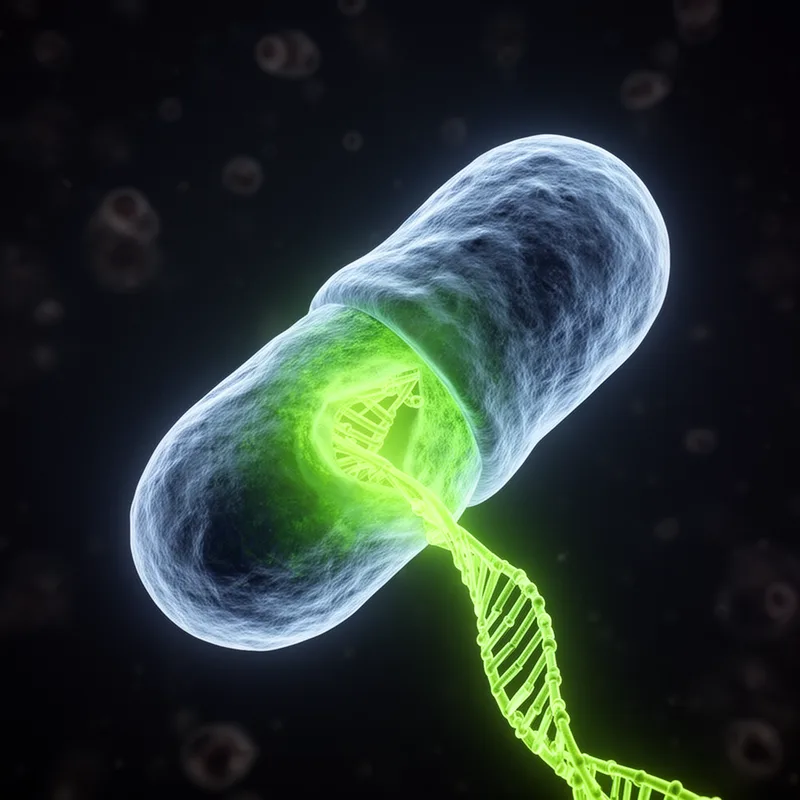
to transform
 13
7.3
13
7.3

- verb
- /trænsˈfɔrm/
- Specialized
- The process allows scientists to transform bacterial cells by incorporating plasmid DNA from closely related species.
- transform cells
Examples
-
Researchers aimed to transform a common bacterium into a powerful tool for bioremediation by altering its genetic makeup.
-
Scientists can transform one bacterial strain into another by introducing new DNA using a technique called gene editing.
-
We then take this, we transform it into a bacterium.
-
l've never seen anything transform an entire host cell so quickly.
-
The HSV genome itself has been found to have distinct transforming regions.
Academic text (2006) -
As for the survivors, the ones with natural immunity, we've developed other viruses that will transform their DNA.
Fiction book (1998) -
Once the heart is formed, the myocytes transform from immature cells into mature cells that cannot proliferate.
Blog text (15) -
Once bitten, he too begins to transform into the hairy wolf-like creature.
Blog text (21) -
Snyder, who earned his doctorate from Dincher's alma mater in 1987, recently grew transformed sugar beet cells into plants.
Academic text (1996) -
In addition to bacteria and yeasts, genetically transformed filamentous fungi could become ethanol plant workhorses.
Academic text (1996)
Synonyms
 1
9.9
1
9.9
To put foreign genes into living cells for study
Antonyms

Surface Forms
Morphology
Etymology
Transform comes from trans- 'across' and form 'shape'. So in biology, to transform a cell is to change it into a different form by giving it new DNA, which makes the cell different.