

transferrin


 1
8.4
1
8.4
- noun
- /trænsˈfɛrɪn/
- Specialized
- Revealingly, the removal of albumin and transferrin from cell culture media is a task that has already been successfully undertaken in the biopharmaceutical industry (for a review, see Timmins and Nielsen 2009).
- transferrin saturation
- iron from transferrin
- transferrin saturation percent
Examples
-
Transferrin saturation percent was less than 16% in 87.3% of IDA patients and was more than 16% in 12.6% of them.
Academic text (2007) -
Dietary iron and recirculated iron combine with transferrin in the plasma and are transported to wherever they are needed.
Academic text (2003) -
And we'll also see that there's a protein called transferrin that binds iron in the plus three state.
-
Transferrin saturation in serum was calculated by dividing iron concentration by the total iron-binding capacity.
Academic text (1994) -
As pointed out by different theories about the relationships between transferrin saturation percent and IDA, there isn't high specificity for the transferrin saturation percent test to determine IDA.
Academic text (2007) -
Once IDA has been identified by clinical evidence and laboratory tests (e.g., hemoglobin, hematocrit, plasma iron, ferritin levels, and transferrin levels), identifying the etiology is necessary.
Academic text (2003) -
Transferrin is a crucial protein that binds iron and helps transport it throughout the body.
-
When iron levels are low, transferrin levels increase to enhance iron transport in the bloodstream.
-
A blood test can measure transferrin to evaluate the body's iron transport capacity.
Synonyms
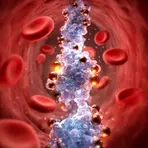
A protein in the blood that carries iron around the body
Surface Forms
Morphology
transferrin = trans + ferr + in
Although built from recognizable combining elements ('trans-' and the protein suffix '-in'), the root 'ferr' is a specialized combining form for 'iron' (not a standalone English word) and the term is a technical biochemical name, so an average B1 learner cannot derive its meaning from its parts.
Etymology
Transferrin comes from the word transfer ('to carry across') plus the common protein ending -in, so think of it as a little blood 'carrier' for iron. That's why transferrin is the protein that holds and moves iron around the body.