
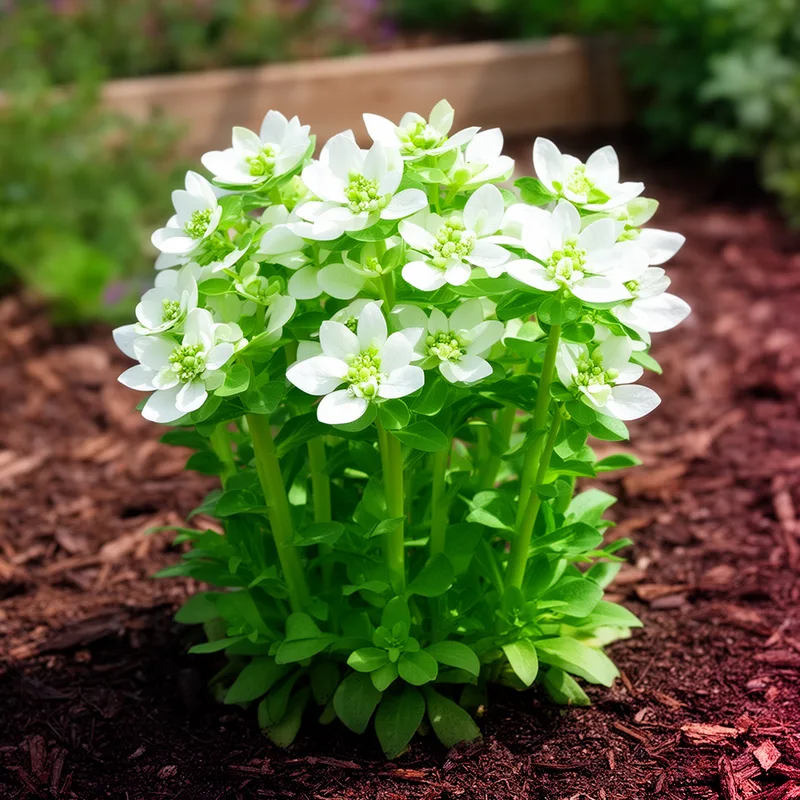
tramp's spurge
- noun
- US
- Tramp's spurge is often cultivated in gardens for its attractive white bracts.
Examples
-
We spotted a cluster of tramp's spurge growing along the roadside.
-
The garden was filled with tramp's spurge in full bloom.
-
The unique appearance of tramp's spurge makes it easy to identify in the wild.
-
Many people admire the beauty of tramp's spurge during spring.
-
Tramp's spurge is often cultivated in gardens for its attractive white bracts.
-
The unique appearance of tramp's spurge makes it easy to identify in the wild.
-
We spotted a cluster of tramp's spurge growing along the roadside.
Synonyms

A small North American plant with white petal-like parts that grows in dry fields

A North American plant that lives for many years and has white parts like petals
A plant that lives for many years with showy white parts that look like petals
Surface Forms
Morphology
tramp's + spurge
This is a simple possessive compound where 'spurge' names a plant and 'tramp's' marks a particular variety or eponym; a learner who knows 'spurge' will therefore infer it denotes a type of spurge (a plant). The fine botanical details (e.g. showy white bracts) are not predictable, but the basic meaning 'a kind of spurge/plant' is directly derivable from the constituents.
Etymology
Tramp's spurge may come from the image of people walking the roads and leaving seeds on their boots. One popular story says the tramp was a walker who spread the plant and the spurge grew along the roadside, so the name came to mean this common plant with showy white bracts.

