
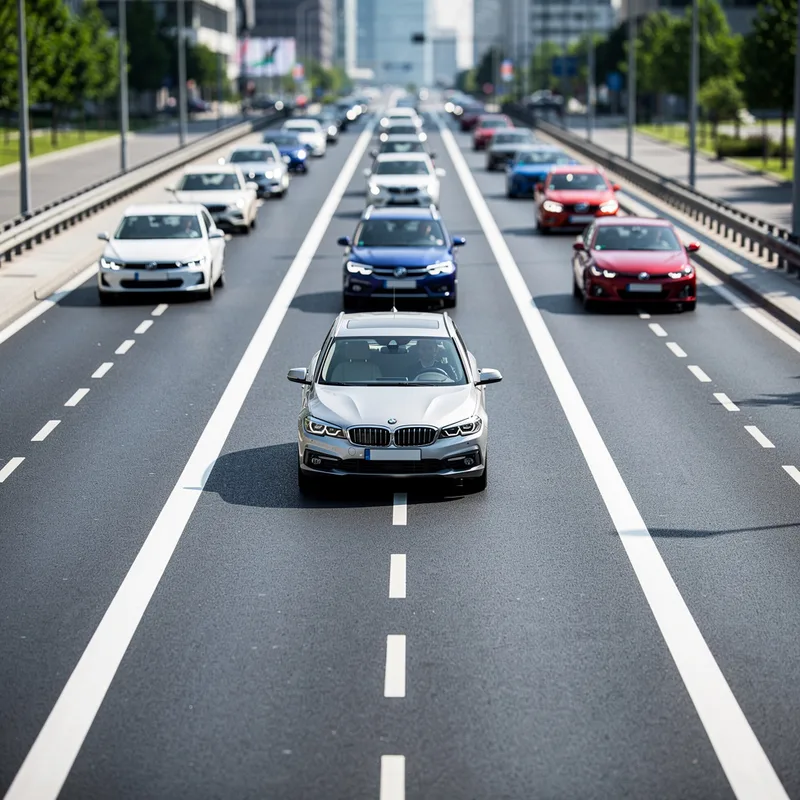
traffic lane
 3
2.0
3
2.0

- noun
- /ˈtræfɪk leɪn/
- Interstates and freeways, by definition, have two or more traffic lanes traveling in the same direction, separated from opposing traffic by a barrier or median.
- two traffic lanes
- traffic lanes in each direction
- traffic lane so cars
Examples
-
All traffic lanes reopened shortly after 7 p.m. when tow trucks arrived to haul away the damaged vehicles.
Blog text (6) -
When I reached the bridge, the majority of the protest crowd was in the Brooklyn-bound vehicular traffic lane of the bridge.
Blog text (27) -
We're in a high-volume traffic lane.
-
However, the merge back into the traffic lane seems way too short and abrupt.
Blog text (11) -
Now Main Street is divided into northbound and southbound traffic lanes, called Park Circle.
Fiction book (2000) -
The traffic lanes were designed for slower speeds and smaller loads, which contributes to frequent truck turnovers, officials said.
Blog text (33) -
The traffic in the right traffic lane was moving steadily, while the left one was at a standstill.
-
To ensure safety, always stay within your designated traffic lane while driving.
-
During rush hour, the traffic lane near the exit becomes congested with cars trying to merge.
Synonyms
 405
1.0
405
1.0
A narrow road or a marked part of a road for cars and bikes
How Reserved

Surface Forms
Morphology
The meaning is directly and transparently derived from combining 'traffic' (flow or volume of vehicles) with 'lane' (a division or strip of road). This straightforward compound noun follows common compositional patterns found across languages, so a B1 learner who knows both constituents would readily infer 'traffic lane' as a marked division of roadway for moving vehicles.
Etymology
Traffic lane comes from a simple road picture: painted lines divide a road into narrow paths, so each lane is a single line for traffic or 'moving vehicles'. So, traffic lane means one marked part of a road made for a 'single line' of cars.