
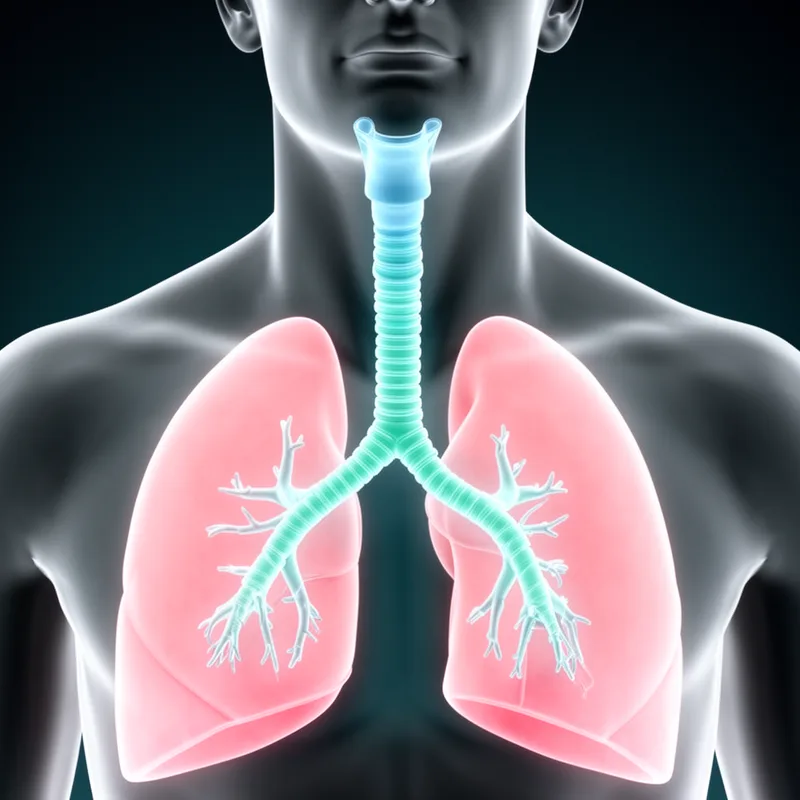
tracheobronchial


 1
7.3
- adjective
- /ˌtreɪkiəˈbrɒŋkiəl/
- Specialized
- During the procedure, the surgeon carefully navigated the tracheobronchial passages to avoid any damage.
- tracheobronchial tree
Examples
-
The development of the flexible endoscope permanently changed the way we evaluate the tracheobronchial tree.
Academic text (2004) -
The doctor explained how diseases can affect the tracheobronchial system, including both the trachea and bronchi.
-
In addition, consideration should be given to routine monitoring when performing lengthy procedures in the tracheobronchial tree.
Academic text (2004) -
Hemangiomas of the airway can involve any site from the nares to the tracheobronchial tree.
Academic text (2006) -
The most common complications from contiguous spread are tracheobronchial or bronchoesophageal fistulas.
Academic text (2007) -
Office tracheobronchoscopy can be performed routinely and safely to obtain anatomic information relating to the tracheobronchial tree in most adults.
Academic text (2004) -
Hemangiomas of the airway are benign vascular lesions that can involve any site from the nares to the tracheobronchial tree.
Academic text (2006) -
In the absence of respiratory protection, mouth-breathing human responders were likely to have an increased respiratory accumulation of the larger (>2.5 mm) particles, particularly in the tracheobronchial region (Schlesinger, 1989).
Academic text (2010) -
A recent preclinical study has shown that both tiotropium and aclidinium have a downregulatory effect on the cough reflex induced by mechanical and chemical stimulation of the tracheobronchial tree in healthy rabbits.
Academic text (2017) -
The patient experienced difficulty breathing due to an obstruction in the tracheobronchial area of the respiratory system.
Surface Forms
Morphology
Etymology
The word tracheobronchial comes from two parts: tracheo- from trachea meaning 'windpipe' and bronch- from bronchus meaning 'air tube'. You can see bronch- in the common word bronchitis. So tracheobronchial refers to the parts that belong to both the windpipe and the airways to the lungs.