
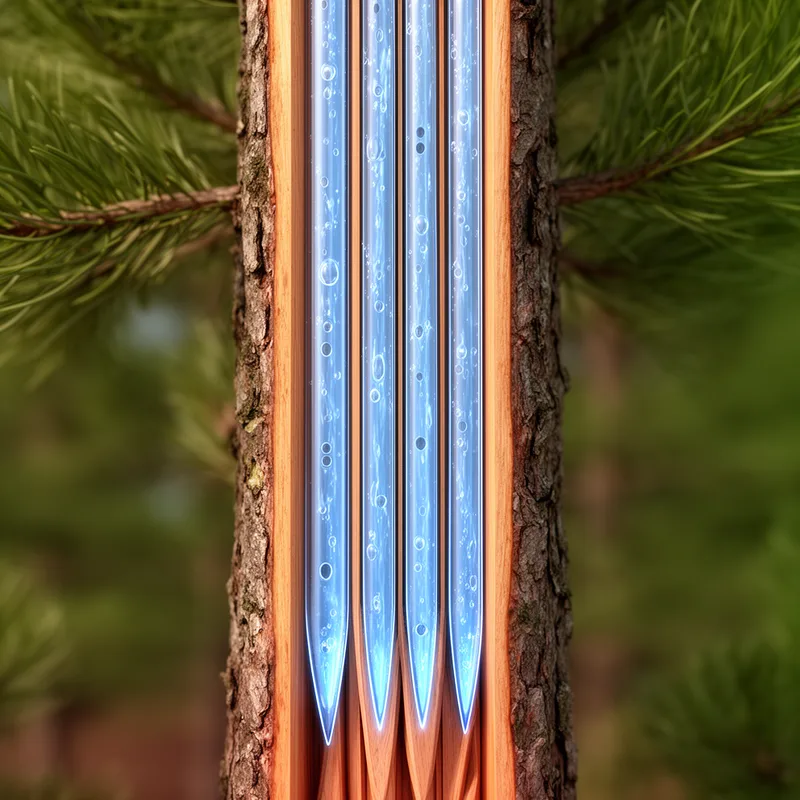
tracheid


 1
9.9
- noun
- /ˈtreɪkiˌɪd/
- Specialized
- Unlike vessel elements, tracheid cells are long and tapering, allowing them to contribute to both support and water transport.
Examples
-
Water moves upward through tracheids by capillary action and adhesion to cell walls.
-
A tracheid is essential for water transport.
-
The pine tree's xylem consists primarily of tracheids rather than vessel elements.
-
Many gymnosperms have tracheids instead of vessels.
-
The tracheids in the conifer's wood help it transport water efficiently.
-
As the tree matured, the tracheids became essential for its structural support.
-
Researchers studied the tracheids to understand how water moves through the plant.
Surface Forms
Morphology
tracheid = trachea (semi-transparent) = trache + id
Formed from 'trachea' (tube) + the suffix '-id' meaning 'resembling' or 'related to'; this yields a 'tube-like' sense that helps infer general shape but not the specialised botanical function.
Etymology
Tracheid comes from the Greek root trachea meaning 'windpipe' or 'tube' and the ending -id meaning 'like'. So a tracheid is a 'tube-like' plant cell that carries water and helps give the plant support.