
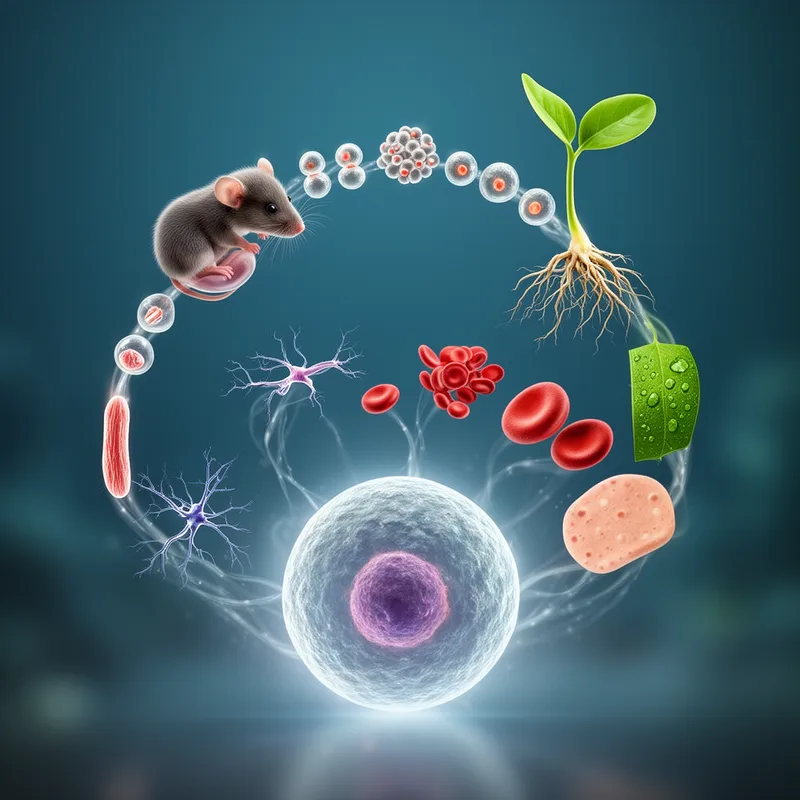
totipotency


 1
9.9
- noun
- /ˌtoʊtɪˈpoʊtənsi/
- Specialized
- Research on the totipotency of stem cells reveals their potential to become various cell types within the body.
- demonstrating the totipotency
Examples
-
If we use determination and restriction, because of their signaling of the loss of totipotency of the cells, as the markers of human singleness, then individuality does not occur until about three weeks after fertilization.
Academic text (1990) -
During the early stages of development, a single cell exhibits totipotency, allowing it to differentiate into any type of cell needed for a complete organism.
-
Maximally, one could argue that full individuality is not achieved until the restriction process is completed and cells have lost their totipotency.
Academic text (1990) -
They too confirmed the totipotency of blastula nuclei in other frog species as well as in some salamander species (reviewed in Di Berardino 1997a).
Academic text (1999) -
Combinations of nuclei and cytoplasm from different genera and different subfamilies resulted in fertile adults, demonstrating the totipotency of fish blastula nuclei.
Academic text (1999) -
Scientists study totipotency to understand how a single fertilized egg can develop into an entire multicellular organism.
Synonyms
Ability of a single cell to become all different body cells or a whole living thing
How Potent

Surface Forms
Morphology
totipotency = totipotent (semi-transparent) = toti + potent + ency
Regular noun formation from the adjective 'totipotent' using the suffix '-ency', so the immediate derivation is straightforward.
Etymology
Totipotency comes from Latin parts totus meaning 'whole' and potentia meaning 'power'. So it means 'the power to make a whole', which explains why we use it for a single cell that can become a complete organism.