

toothbrush tree
- noun
- In rural villages, people often use twigs from the toothbrush tree to clean their teeth.
Examples
-
The toothbrush tree is valued for its natural antibacterial properties in many traditional communities.
-
The toothbrush tree is common in many arid regions.
-
Camels also feed on the leaves and shoots of the toothbrush tree in arid regions.
-
Many people use the toothbrush tree for oral hygiene.
-
In some cultures, people use the fibrous twigs of the toothbrush tree to clean their teeth.
-
The toothbrush tree is commonly known in traditional medicine for its oral hygiene benefits.
-
Many locals believe that brushing with the toothbrush tree can help maintain healthy gums.
Synonyms
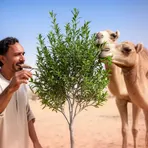
A small evergreen shrub or tree whose twigs people use as natural toothbrushes and whose shoots camels eat
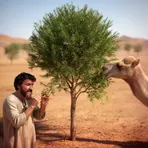
A small evergreen tree from dry regions whose branches are used as natural toothbrushes and whose shoots are animal food
How Big


Surface Forms
Morphology
The compound 'toothbrush tree' is directly interpretable from 'toothbrush' + 'tree' as a tree associated with or used for toothbrushing (i.e., a tree whose twigs serve as natural toothbrushes). This transparent noun–noun compounding follows regular English composition patterns and is likely understandable to a B1 learner who knows both constituent words.
Etymology
Toothbrush tree comes from a simple image: people in some villages chew the small twigs until the ends become soft and brush-like, and then use them like a toothbrush to clean their teeth. So the name means a tree whose twigs are used as a 'natural toothbrush'.