
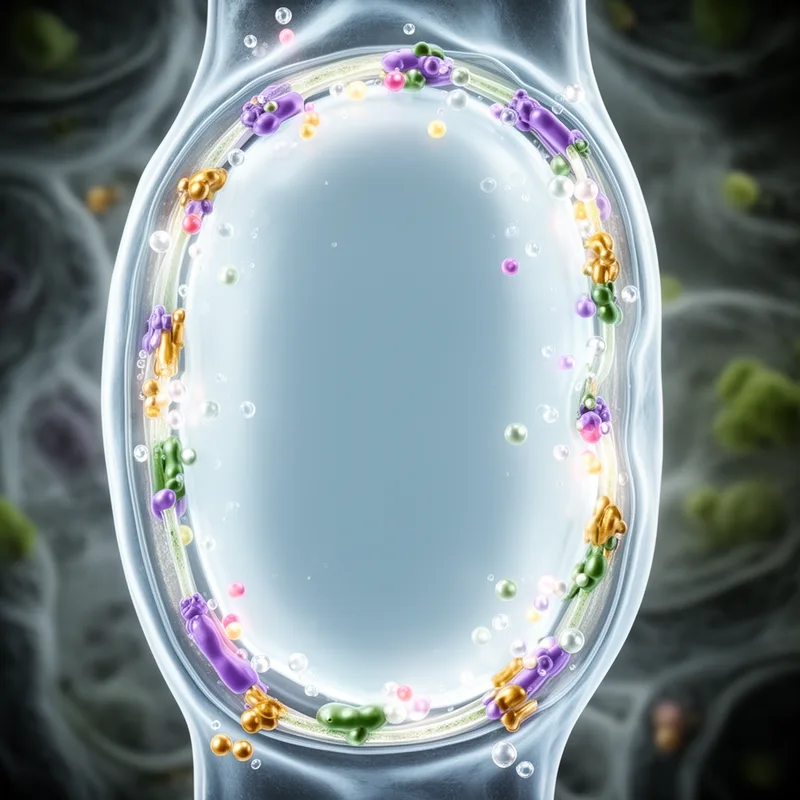
tonoplast
- noun
- /ˈtoʊnəˌplæst/
- Specialized
- The tonoplast helps regulate the movement of ions and water into the plant cell's vacuole.
Examples
-
Damage to the tonoplast can affect the cell's ability to maintain internal pressure.
-
Researchers studied the proteins embedded in the tonoplast to understand nutrient storage.
-
The tonoplast regulates the flow of ions.
-
In plant cells, the tonoplast is essential.
-
The tonoplast regulates the intake of nutrients in the plant cell's vacuole.
-
Without a functioning tonoplast, the plant cell cannot control its internal environment effectively.
-
Researchers are investigating how the tonoplast affects water retention in plant cells.
Surface Forms
Morphology
tonoplast = tono + plast
The term is built from technical combining forms ('tono-' and '-plast') that are not familiar standalone English words, so an average B1 learner cannot derive 'vacuolar membrane' from the parts.
Etymology
Tonoplast comes from two parts: tono- meaning 'tension' or 'stretch' and -plast meaning 'formed' or 'molded', like in plastic. So the tonoplast is the membrane around a plant vacuole that helps hold its internal pressure and control what moves in and out.

