

tonguing


 1
7.5
1
7.5
- noun
- /ˈtʌŋɪŋ/
- Specialized
 :
articulación
:
articulación
- Effective tonguing is essential for musicians to produce clean, articulate notes when playing a wind instrument.
So the vowel sound in boat most hope starts with the tongue further forwards in the mouth.
- So the vowel sound in boat most hope starts with the tongue further forwards in the mouth.
Examples
-
No, you sound like someone who is making preliminary sounds but not completing them with the tongue and the lips.
-
It may be necessary to imitate the tonguing and breathing mistakes students are making and ask them to compare their playing to the proper model.
Academic text (2007) -
First, each word ends in a DE sound, which is a tongue tip sound like this.
-
So the vowel sound in boat most hope starts with the tongue further forwards in the mouth.
-
In singing, proper tonguing techniques help emphasize the consonants to make the lyrics clear.
-
Teachers often demonstrate tonguing exercises to help students pronounce challenging consonant sounds correctly.
Antonyms


Compounds
- Specialized
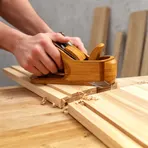
A hand tool that cuts matching raised edges and slots on boards so they fit together
How Articulated
3
5.5

- Specialized
1
7.5
Surface Forms
Morphology
Etymology
Tonguing comes from the simple word tongue, meaning 'the mouth muscle used for taste and speech'. So in speaking and singing, tonguing means moving the tongue to make or separate sounds clearly, which is why it helps with good pronunciation.