
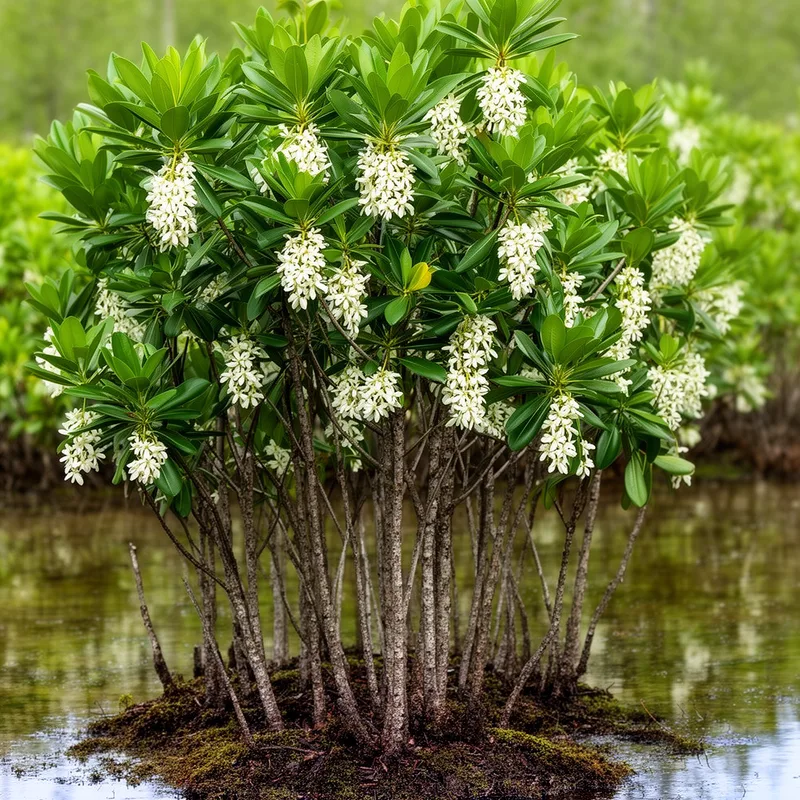
titi family
- noun
- Specialized
- The titi family is recognized for its evergreen leaves and clusters of delicate white flowers.
Examples
-
Many plants in the titi family thrive in wetland areas.
-
Several native species in the southeastern United States belong to the titi family.
-
Botanists studied the ecological significance of the titi family in wetland habitats.
-
The titi family includes various species of shrubs.
-
The titi family includes several species of shrubs that are important for local ecosystems.
-
Botanists recognize the titi family for its leathery leaves and small white flowers.
-
Plants in the titi family are commonly found in wetland habitats across the southeastern United States.
Synonyms
A family of shrubs and trees with thick shiny leaves and small white flowers
A group of related shrubs and trees with thick, tough leaves and small white flowers in clusters
A group of shrubs and trees with leathery leaves and small white flowers
Surface Forms
Morphology
The meaning is directly compositional: 'titi' names a plant and 'family' denotes a scientific grouping, so 'titi family' = the family of titi plants. This taxonomic noun–noun pattern is common and cross-linguistically transparent, so a B1 learner who knows both constituents can infer the meaning.
Etymology
Titi family may come from a local Native word for certain evergreen trees that early settlers used for 'tea' and simple 'medicine'. Because people used the same name for many related trees, that name became a 'family' for similar plants, which is why we call them the titi family today.

