
time exposure


 1
6.0
1
6.0
- noun
- /taɪm ɪkˈspoʊʒər/
- Specialized
- Using a time exposure technique, the artist depicted the flowing movement of the waterfall in sharp detail.
- time exposure and snapshot
Loading YouTube…
Watch on YouTubeThey work pretty much the same way, but we take long time exposures and we add up the data very carefully.
- They work pretty much the same way, but we take long time exposures and we add up the data very carefully.
Examples
-
Telescopes must be made to track the stars with great accuracy during time exposures.
Academic text (1991) -
The photograph captured the city skyline beautifully during a long time exposure, revealing the movement of clouds and traffic lights.
-
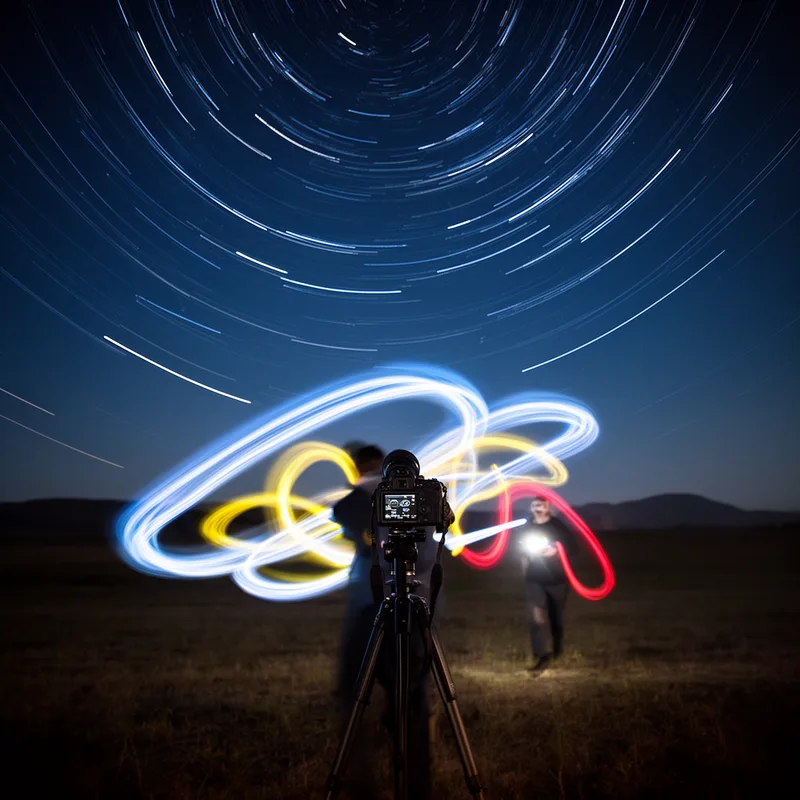
This picture was taken with a time exposure.
-
They work pretty much the same way, but we take long time exposures and we add up the data very carefully.
-
Well, if you take a time exposure photograph of the stars, they seem to be moving in circles about the pole star, but all motion is relative.
-
All exposures were time exposures ranging from 15 to over 30 seconds at f/16 to f/22.
Academic text (1995) -
B) Set the lens aperture at f/16 and use a time exposure of five seconds when using ASA-64 or ASA-100 film.
Academic text (1993) -
For the archetypal time exposure, de Duve posits Julia Margaret Cameron's soft-focus portraiture.
Academic text (2005) -
With a time exposure setting, you can create stunning images of star trails in the night sky.
How Long

Surface Forms
Morphology
The meaning is directly compositional: 'exposure' (allowing light onto film/sensor) qualified by 'time' indicates an exposure defined by its duration (a long exposure or the act of exposing for a period). This noun‑noun modification follows normal English patterns and is cross‑linguistically transparent, so a B1 learner who knows both constituents can infer the meaning.
Etymology
Time exposure comes from the simple idea of leaving the camera open to light for a long time so faint light and movement are recorded. That's why a time exposure means 'a photo made with a long exposure' or the act of taking such a photo to show star trails or light patterns.