
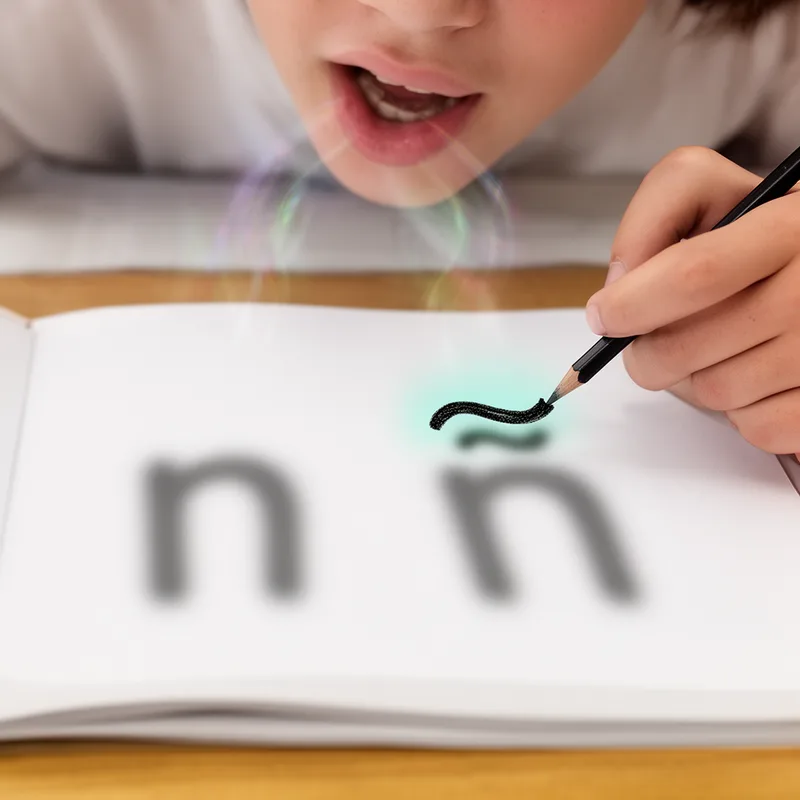
tilde
 1
7.9

- noun
- /ˈtɪldə/
- Specialized
- Sacred texts gets a series of tildes and and asterisks because, well, all three of these generally have sacred texts.
Examples
-
In Spanish, the letter ñ is pronounced differently because of the tilde on top of it.
-
The frequency of forms reflecting punar rules out the possibility of a mere manuscript variant resulting from accidental scribal omission of the tilde.
Academic text (1995) -
When typing in Portuguese, make sure to use a tilde over the vowels where needed.
-
The letter c in café uses a tilde to indicate the correct pronunciation of the letter 'e' in certain contexts.
Synonyms
 2
4.8
A mark above a vowel showing how to pronounce it
 1
8.6
A small mark that changes the sound of a letter

 1
3.4
A mark placed above or below a letter to show which syllable is strong and how to say it
 1
6.4
A small sign written on a letter to show how to say it or to change its meaning
Surface Forms
Etymology
The word tilde comes from the Latin titulus, which meant 'title' or 'mark', and it is the same root as the English word title. A tilde is a small mark that sits above a letter to show a different sound, as in Spanish ñ or Portuguese letters that make a nasal sound.