
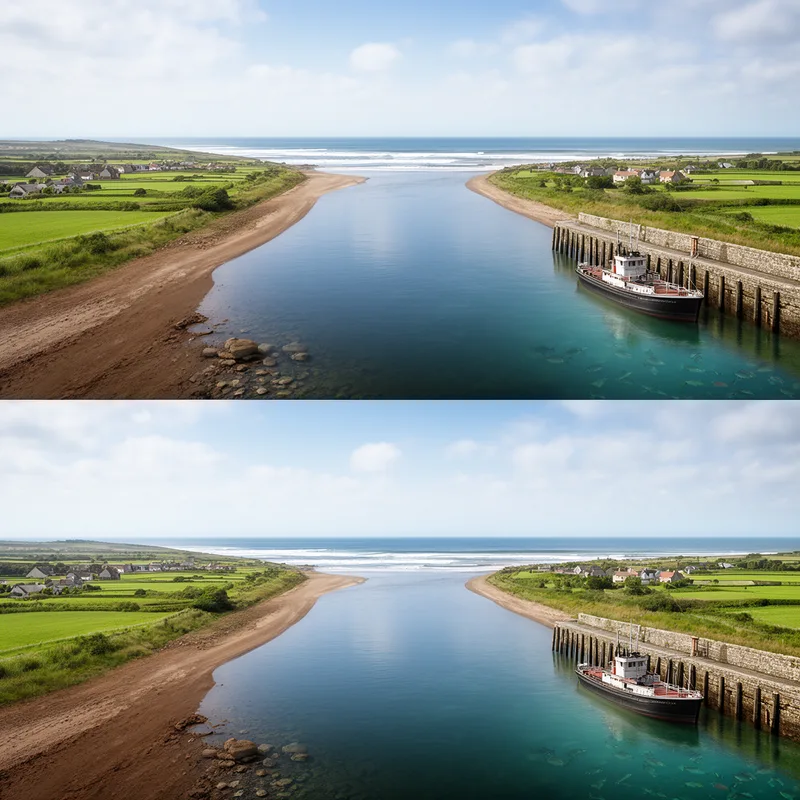
tidewater river
- noun
- During high tide, the water level in a tidewater river can rise significantly, affecting local ecosystems and navigation.
Examples
-
The Potomac is a well-known tidewater river where tidal effects can be seen far upstream.
-
Settlements often grew along a tidewater river because ships could travel inland with the tides.
-
Fish populations in a tidewater river are influenced by changes in salinity due to the tides.
-
The tidewater river flows through the marshlands.
-
Many fish thrive in the tidewater rivers of the region.
-
The Chesapeake Bay is home to a variety of wildlife, with many species relying on the nutrients from the tidewater river that flows into it.
-
Tourists often kayak along the tidewater river, enjoying the scenic views and observing the unique wildlife that thrives in the brackish waters.
Synonyms
A river where the tide from the sea moves water far up the river

A part of a river where the tide makes the water go in the other direction or rise and fall

A stream whose water level and flow change with sea tides, reaching far upstream
Surface Forms
Morphology
The meaning 'a river where the effects of ocean tides are perceptible' is directly and transparently derived from combining 'tidewater' (coastal/tidal waters) with 'river' (a flowing watercourse). This noun+noun compositional pattern is common in English and cross-linguistically familiar, so a B1 learner who knows the constituents can readily infer the MWE meaning.
Etymology
The compound tidewater river combines tide and water. Imagine the sea's tides pushing water up and pulling it down the river, so the river rises and falls with the sea. That's why the name means 'a river where the ocean's tides can be felt far upstream'.

