
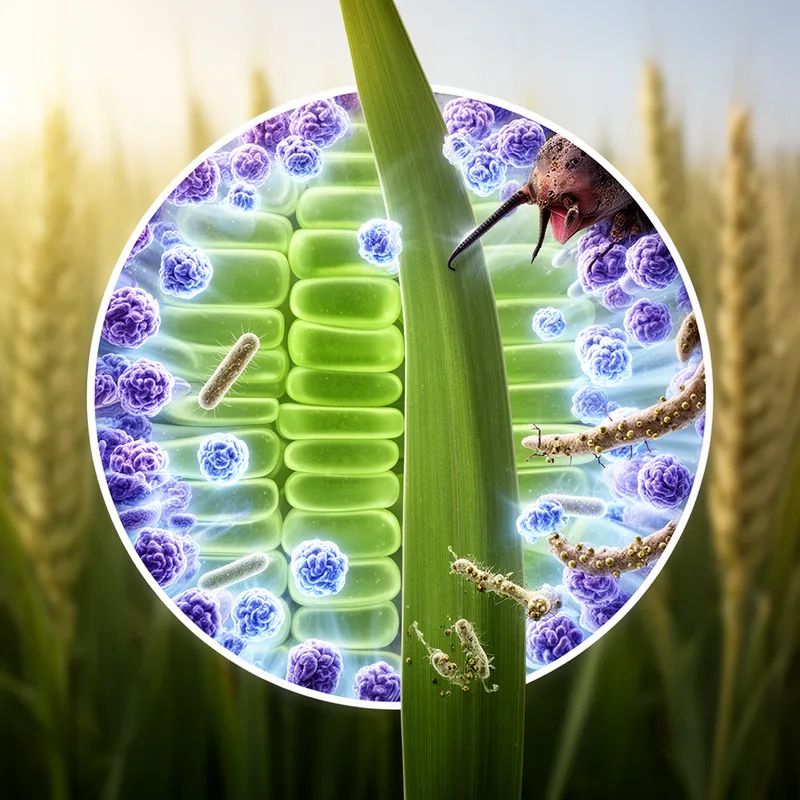
thionin
- noun
- /ˈθaɪənɪn/
- Specialized
- The wheat variety produced more thionin, making it more resistant to insect attacks.
Examples
-
Scientists discovered that thionin helps protect plants from harmful bacteria and fungi.
-
Researchers are studying how thionin can be used to develop natural pesticides.
-
The plant produces thionin to protect itself from pests.
-
Some researchers study thionins for their antimicrobial properties.
-
Scientists discovered that thionin helps protect plants from harmful bacteria and fungi.
-
The wheat variety produced more thionin, making it more resistant to insect attacks.
-
The plant produces thionin to defend itself against pests.
Surface Forms
Etymology
Thionin for the small plant protein also comes from the prefix thio- meaning 'sulfur', because these proteins have many sulfur-containing parts. That's why the name fits: the sulfur-rich structure helps the protein defend the plant against microbes and insects.

