
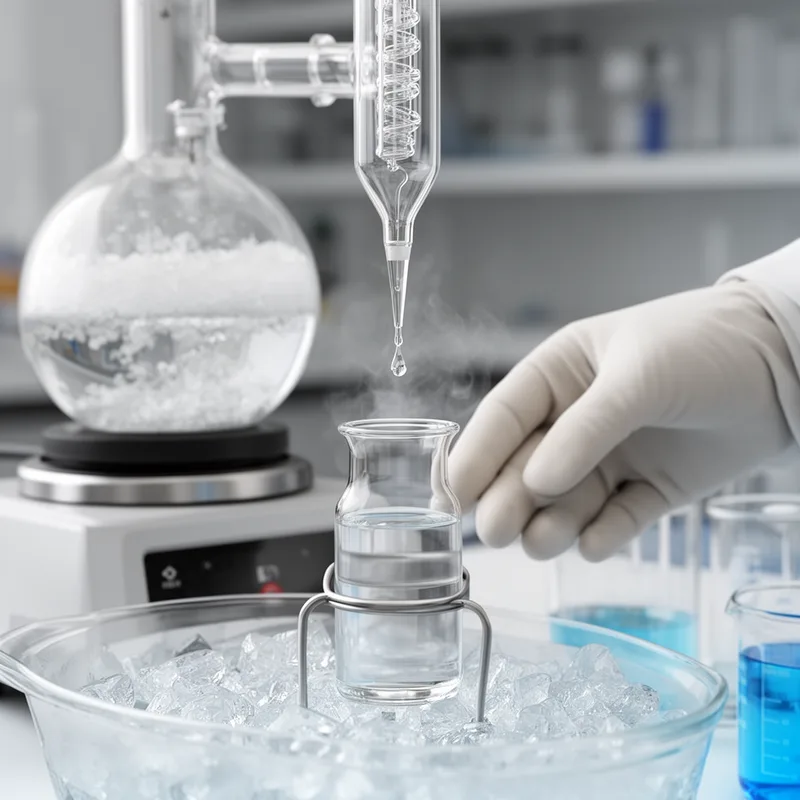
thiocyanic acid
- noun
- /ˌθaɪoʊˈsaɪənɪk ˈæsɪd/
- Specialized
- The laboratory synthesized thiocyanic acid by distilling potassium thiocyanate.
Examples
-
Because thiocyanic acid is unstable, it must be prepared fresh before use in experiments.
-
Researchers noted that thiocyanic acid rapidly decomposes at room temperature.
-
The chemist prepared thiocyanic acid for the experiment.
-
Have you ever worked with thiocyanic acid in your lab?
-
Because thiocyanic acid is unstable, it must be prepared fresh before use in experiments.
-
Researchers noted that thiocyanic acid rapidly decomposes at room temperature.
-
The laboratory synthesized thiocyanic acid by distilling potassium thiocyanate.
Surface Forms
Morphology
thiocyanic + acid
While 'acid' is a transparent, general lexical item, 'thiocyanic' is a specialist chemical adjective (related to thiocyanate) that is not decomposable into everyday morphemes a B1 learner would know. The specific referent and properties (HSCN, an unstable laboratory acid) are domain-specific and not predictable from the surface parts, so the expression is opaque to an average B1 learner.
Etymology
The name thiocyanic acid comes from three parts: thio- meaning 'sulfur', cyan from a word for 'dark blue' used in 'cyanide', and acid meaning 'acid'. So the name tells you it is an acid that contains sulfur and is related to cyanide.

