
theogony


 1
9.9
- noun
- /θiˈɑɡəni/
- Literature
- In the second sentence, Socrates is quoting Hesiod's Theogony 265.60.
- Hesiod's theogony
Examples
-
At Theogony 211, Moros appears as another fatherless child of Night.
Academic text (1991) -
The inventiveness and reinterpretation that marked these acts of theogony.
Academic text (2003) -
The text in front of us might as well be called Theogony or Metamorphoses.
Academic text (1994) -
We'll be resuming next month talking about Hessian and works and days and perhaps getting into the Theogony as well.
-
Economy, Geography, and Theogony
Academic text (2003) -
Hesiod: Out of chaos, the order of the gods (theogony) and the order of the cosmos (cosmogony) come to be.
Academic text (2017) -
The productive model traces its origin, and thus the form of historical narrative found in epic literature and theogonies of other sorts is well suited for it.
Academic text (1991) -
In his Theogony, the Greek poet Hesiod attributed a central role to mountains (eighth century B.C. 1983, vv. 116-138).
Academic text (2005) -
In Hesiod's Theogony, Thanatos appears as the son of Nux (Night) and brother of Hypnos (Sleep) (211-2, 756, 758-66).
Academic text (1991) -
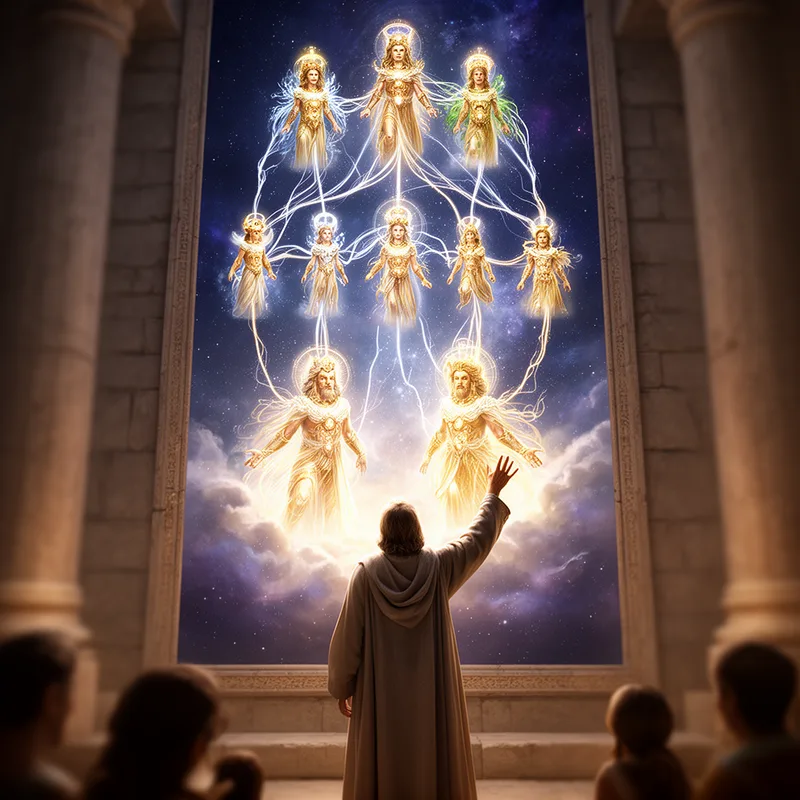
Hesiod's theogony provides a detailed account of the origins of the Greek gods.
Synonyms
 4
5.6
The study of old stories from a culture and their meaning
Surface Forms
Morphology
theogony = theo (semi-transparent) = theo + gony
The meaning follows directly from the combining forms 'theo-' (god) + '-gony' (origin), but both are specialized combining forms rather than common standalone words, so learners may not reliably infer the meaning.
Etymology
Theogony comes from the Greek parts theo- meaning 'god' and -gony meaning 'birth' or 'origin'. It literally means the 'birth of the gods', so a theogony is a story or study about how the gods began and how they are related.