
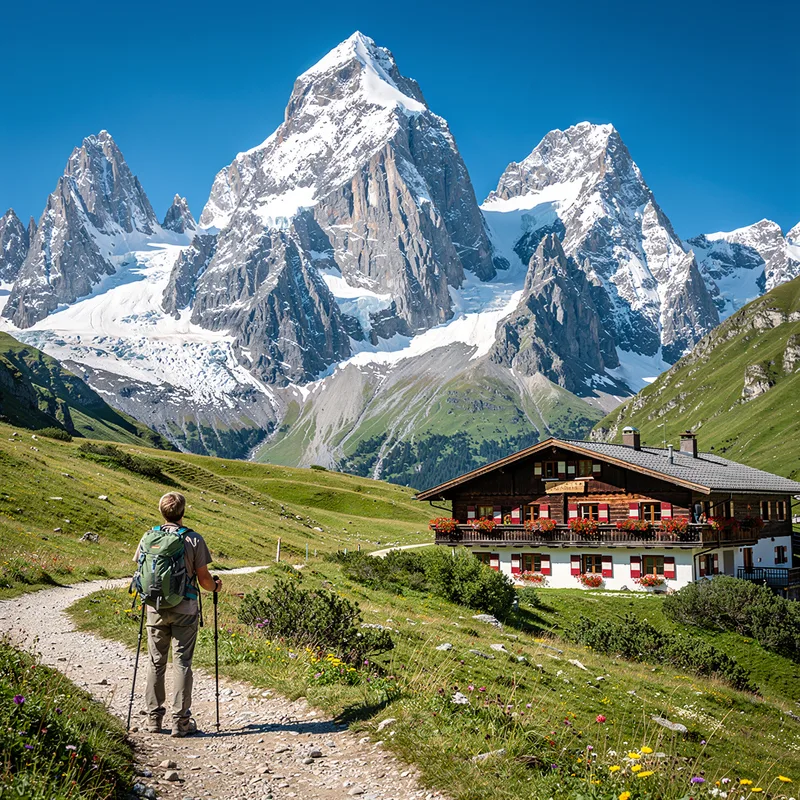
the Alps
 16
3.3
16
3.3

- proper noun
- Napoleon at Austerlitz, Hannibal at the Alps, Caesar at the Rubicon.
- north of the Alps
- cross the Alps
Loading YouTube…
Watch on YouTubeAll of the glaciers from the Alps to Alaska and so on make up another two or three feet a meter.
- All of the glaciers from the Alps to Alaska and so on make up another two or three feet a meter.
- They created a new set of regional governments all across Italy, from the up in the Alps to down in Sicily.
- I think it was either football or rugby or skiing trip in the Alps.
- I think it's because, and again, this puts me on the Alps with folks because that's a less sinister motive.
Examples
-
As in most places in central and eastern Europe north of the Alps, the villages were very small.
Academic text (1995) -
In the winter, when you are skiing in the Alps, you may experience ultraviolet radiation, but it's all UVA.
-
Once we cross the Alps, we're safe.
-
Tomorrow night, you will be in the Alps, freezing.
-
Our man will be involved in a climb in the Alps this summer.
-
The next spring, Napoleon's army marched over the Alps into Italy.
-
A fearfully cold wind blows through Verona from out of the Alps.
-
They followed Hannibal and Napoleon, they really crossed the Alps.
-
He was rewarded with an army command in Switzerland, and that winter led his men through the Alps to attack the Austrians in Italy.
-
During winter, many tourists visit the Alps for skiing and snowboarding.
Synonyms
 35
1.8
35
1.8
A high mountain range in south central Europe known for beautiful views and winter sports
Surface Forms
Morphology
the + Alps
The phrase is simply the definite article 'the' plus the place name 'Alps', so a learner who knows the constituents will understand it refers to that specific mountain range. This is fully compositional and cross-linguistically common (article + proper place name), making the meaning directly derivable from the parts.
Etymology
The Alps probably comes from an old word meaning 'white', because the high peaks are often covered in snow. So the Alps came to mean the big, snowy mountain range in Europe.