
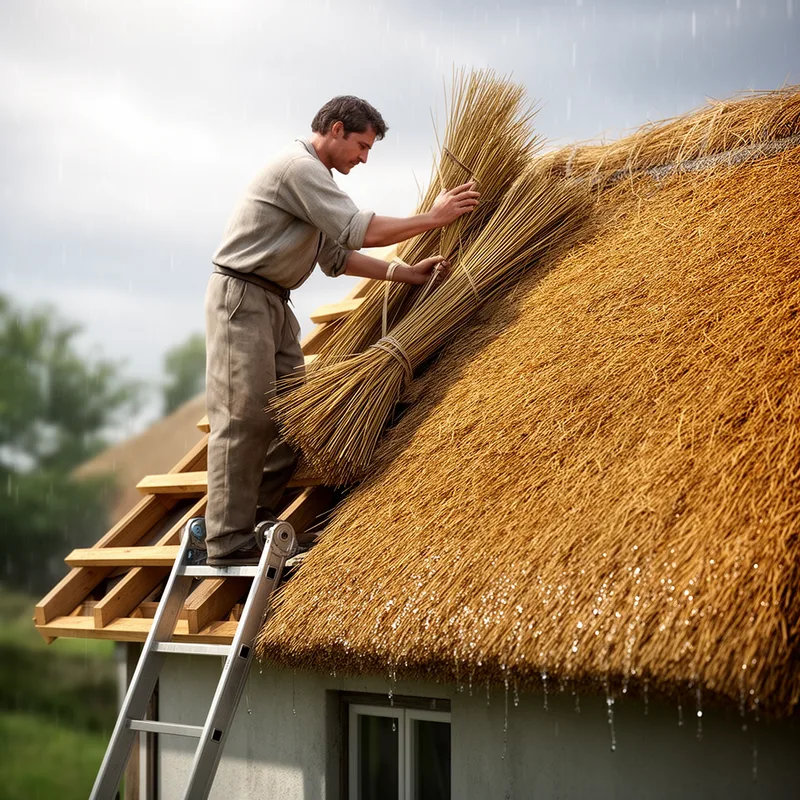
to thatching
- verb
- /ˈθæʧɪŋ/
- The workers spent several days thatching the cottage roof with bundles of dry reeds.
Examples
-
They are thatching the roof with straw.
-
He learned the skill of thatching from his grandfather, who was a master thatcher.
-
Traditional houses in the village are still thatching their roofs to maintain the historic look.
-
The workers thatched the house last summer.
-
The workers spent several days thatching the cottage roof with bundles of dry reeds.
-
They are thatching the roof with straw to keep out the rain.
-
He learned how to thatch roofs during his apprenticeship with a skilled craftsman.
Synonyms

 9
2.8
9
2.8

To cover a building with a top layer to keep out rain
 4
6.8
4
6.8
To cover a roof with thin flat pieces of wood or similar material

To cover a roof with bundles of long grass that grow near water
Surface Forms
Morphology
Etymology
Thatching comes from the old English root thatch, which meant 'to cover', and it named the work of covering a roof with straw or reeds. So to thatch is to 'cover' a roof with plant material to keep out rain and cold.