
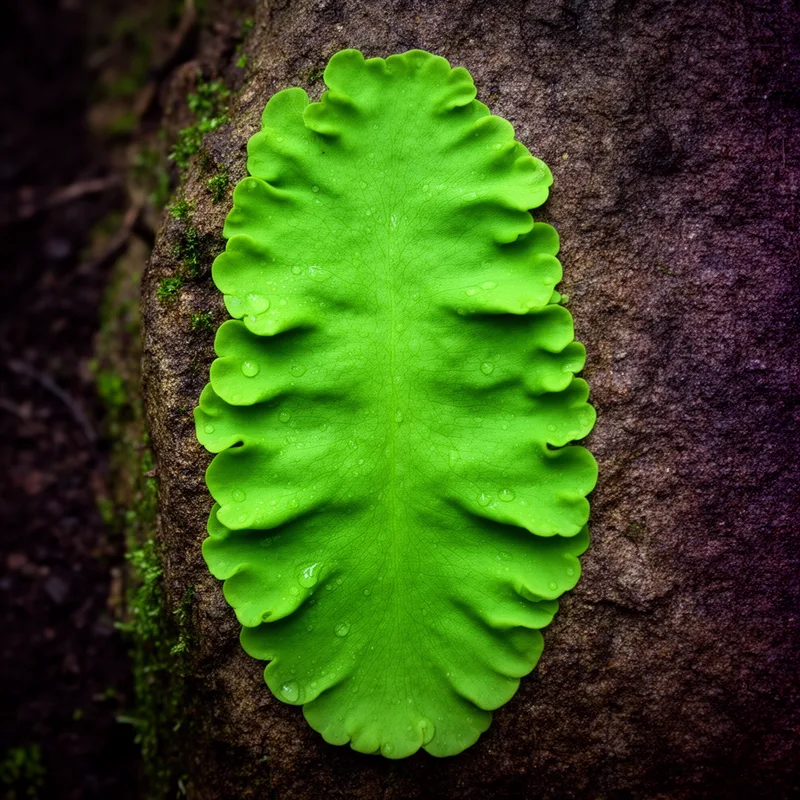
thallose
- adjective
- /ˈθæloʊs/
- Specialized
- Many liverworts are thallose, lacking true stems and leaves.
Examples
-
Many liverworts are thallose, lacking true stems and leaves.
-
Some algae display a thallose form, making them difficult to distinguish from mosses.
-
The thallose structure of the plant allows it to absorb water across its entire surface.
-
The thallose structure of the algae is fascinating.
-
Mosses and liverworts are often thallose in form.
-
The thallose structure of the plant allows it to absorb water across its entire surface.
-
Some algae display a thallose form, making them difficult to distinguish from mosses.
Synonyms



 1
9.9
A plant body that has no separate stem, root, or leaf
Surface Forms
Morphology
Etymology
Thallose comes from the Greek thallos, meaning 'young shoot', and is related to thallus, the name for a flat plant body. So, a thallose plant is like a flat green 'shoot' spread out instead of having separate stems and leaves.