

thallium
 4
9.9
4
9.9

- noun
- /ˈθæl.i.əm/
- Specialized
- Last month, I found thallium in my cell phone.
- thallium-doped iodide
- thallium-doped
Examples
-
Authorities find on the coke cans in her garbage some small amounts of thallium, which is illegal rat poison.
-
While incarcerated, Siphiwo was repeatedly tortured and, unbeknownst to him, poisoned with thallium, a rat poison.
Academic text (2005) -
She was poisoned with thallium by Mr Bennett.
-
Post-mortem report states the presence of Thallium Nitrate, a heavy metal poison in Aparna's body.
Blog text (3) -
Excessive levels of cadmium, antimony, and thallium were also detected in the wastewaters.
Blog text (32) -
Gaia's body tested positive for a highly toxic substance called thallium.
-
Last month, I found thallium in my cell phone, which is used in electronic devices.
-
Doctors at an American military hospital eventually identified thallium and managed to save his life.
Synonyms
 3
9.9
3
9.9
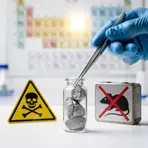
The chemical symbol for thallium, a soft gray poisonous metal

A soft, silvery metal that is very poisonous and darkens in air
Surface Forms
Morphology
thallium = thall + ium
Although the ending '-ium' signals a chemical element name, the base 'thall' is not a recognizable English word for most learners, so the meaning is not inferable compositionally.
Etymology
The word thallium comes from the Greek root thallos, meaning 'green shoot', because when scientists looked at the light from this element they saw a bright green line, so the metal was named for that green mark. So, remember thallium as a soft, grey but very toxic metal that is used in some electronics and was once used in poisons.