
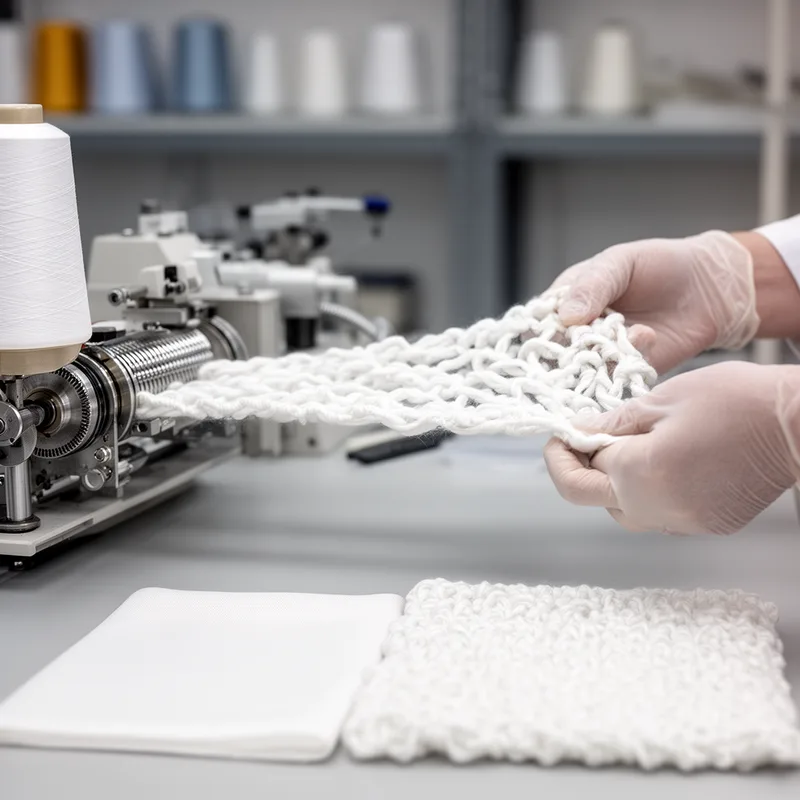
texturing
- noun
- /ˈtɛkstʃərɪŋ/
- Specialized
- The texturing operation was added to the thin-film disk process to increase the surface roughness, preventing high static-friction forces between the slider and disk at rest.
- texturing of substrates
Examples
-
The texturing of glass substrates can be done mechanically using diamond slurry or chemically by means of etching.
Academic text (1996) -
The texturing of the disk surface affects stiction, friction, durability, head flying height, and magnetic performance.
Academic text (1996) -
Second, texturing of carbon is still under development and will require some additional improvements before it can be implemented.
Academic text (1996) -
Two basic process methods for mechanical texturing involve the use of fixed and free abrasives.
Academic text (1996) -
Texturing methods
Academic text (1996) -
At IBM, the laser-texturing approach has been adapted for disk manufacturing 10.
Academic text (1996) -
Alternate substrate texturing issues.
Academic text (1996) -
Texturing of substrates
Academic text (1996) -
The texturing of the fabric gives it a unique feel and helps hide imperfections.
-
Using a chemical texturing method can enhance the appearance of synthetic fibers.
Synonyms

 7
3.1
7
3.1

Stitching together layers of fabric with soft filling to make a warm blanket
 1
4.5
1
4.5
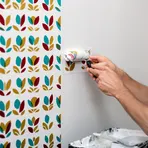
Making repeated designs on a surface, like cloth or walls
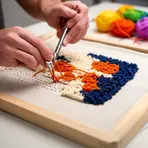
A way of making fabric by stitching loops of yarn to make a raised pattern

A fabric treatment that removes parts to make see-through patterns
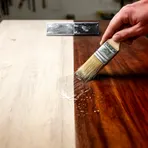
A thin layer on wood or metal that protects and looks good
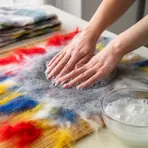
A process of pressing wool or other fibers together to make a dense cloth
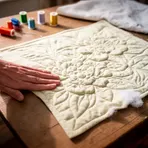
A quilting method that makes raised padded designs on fabric
Antonyms
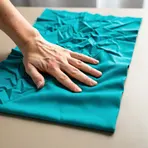
Surface Forms
Morphology
texturing = texture (semi-transparent) = texture + ing
The derivation from 'texture' is clear, but the textile-specific technical sense ('creating bulk, stretch, or permanent surface pattern') is specialized and may not be obvious to an average learner.
Etymology
Texturing comes from the Latin root texere 'to weave' and shares the same root as textile. In fibers and yarn, texturing means changing the thread's surface or structure so it gains bulk, stretch, or a different feel, much like changing the 'weave' of a cloth.