
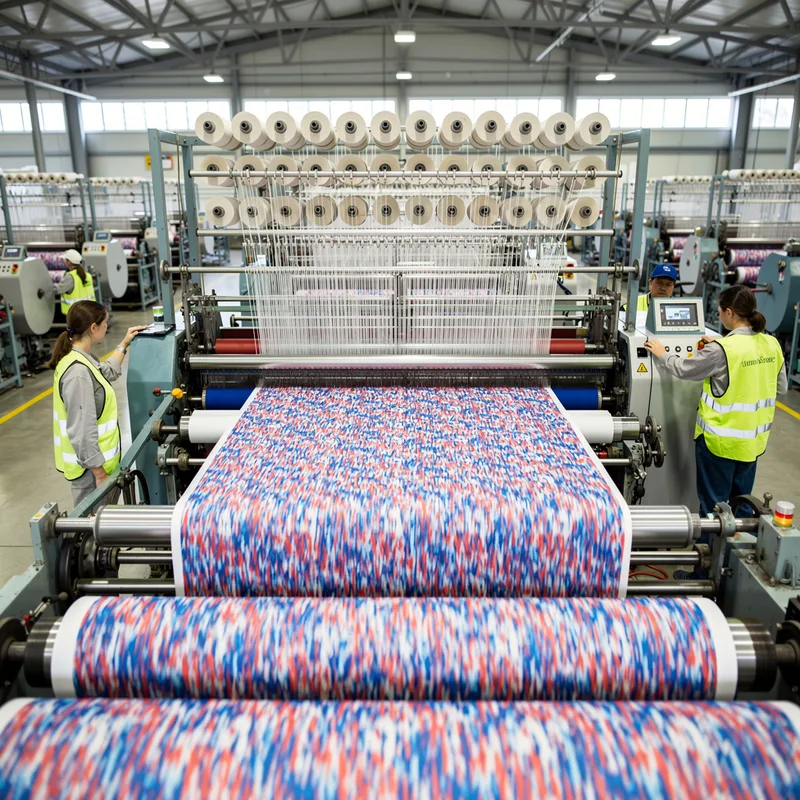
textile mill
 4
3.3
4
3.3

- noun
- /ˈtɛkstaɪl mɪl/
- The workers at the textile mill produce a variety of fabrics each day.
- cotton textile mills
- new textile mills
Loading YouTube…
Watch on YouTubeThey're working in the textile mills and the steel mills in New England.
- They're working in the textile mills and the steel mills in New England.
- They buy Gray goods from textile mills and they do the finishing or the converting fabric to produce fashion fabrics.
Examples
-
Before 1840, industrialization in Leeds meant primarily the spread of textile mills and machinery.
Academic text (1993) -
This made Southerners, as well as Northern textile mills, very wealthy.
-
Originally you had people working in textile mills and they would take, for example, cotton.
-
Some moved down to the textile mills in Massachusetts.
Fiction book (1995) -
In my senior year of high school, I worked in a textile mill from 7 PM to 11 PM.
Blog text (32) -
They're working in the textile mills and the steel mills in New England.
-
In 1989, the textile-mill sector employed 726,100 workers and the apparel industry employed 1,091,500 workers.
Academic text (1992) -
The unit begins with an overview of the Industrial Revolution from its English roots and continues with a focus on the textile mills that operated in Lowell and Lawrence, Massachusetts.
Academic text (2003) -
There was no hint in Pierpont's poem that, even as he spoke, 40,000 women labored in New England's textile mills.
Academic text (2002) -
During the early decades of the twentieth century, a culture of paternalism dominated community life and labor relations in the textile mill villages that dotted the Appalachian foothills and Piedmont South.
Academic text (2007)
Synonyms
 869
1.0
869
1.0
A building where people make goods using machines
 171
2.3
171
2.3
A building where things are made or raw materials are processed
 12
3.2
12
3.2
A large factory where goods are made using machines
 2
3.4
2
3.4
A factory where workers make cloth from cotton

A machine in a cloth factory that uses wire cylinders to make fabric soft and fuzzy
How Big

Surface Forms
Morphology
The meaning 'a factory where textiles are produced' is directly and transparently derived from combining 'textile' (cloth or fabric) with 'mill' (a facility for processing goods). This noun–noun compounding is a regular, cross-linguistically common composition pattern, so a B1 learner who knows both constituents would readily infer the MWE's meaning.
Etymology
The noun textile mill comes from two simple images: textile meaning cloth and mill meaning a building with a water wheel that turns machines to make things. Picture a wheel by a river turning machines that spin thread and make fabric — so it means 'a factory that makes cloth'.