
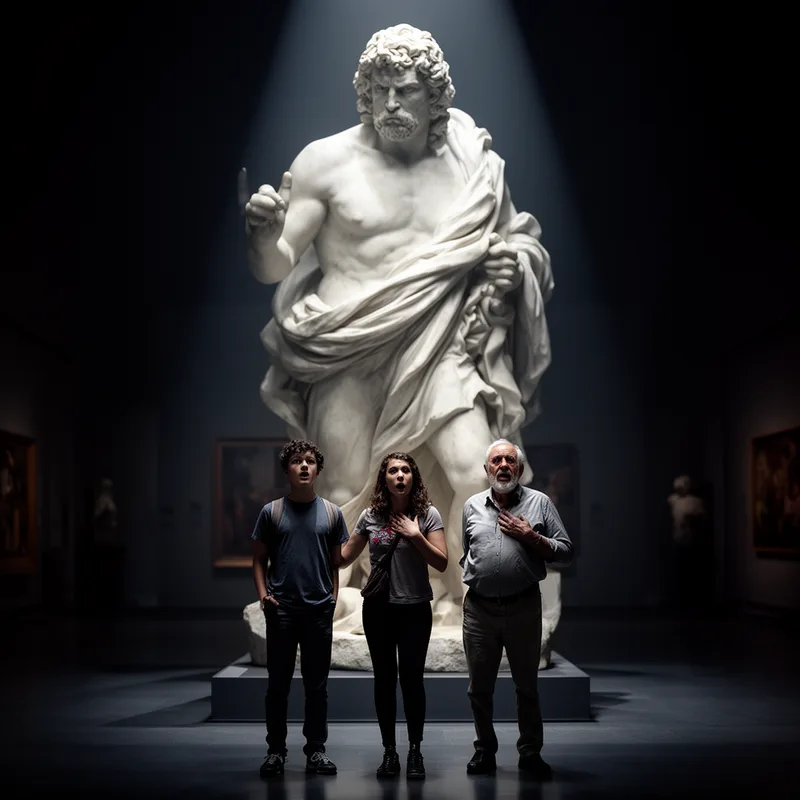
terribilità
- noun
- /tɛrɪˈbɪlɪti/
- Literature
 :
terribilidad
:
terribilidad
- The terribilità of the painting left the audience speechless, overwhelmed by its emotional force.
Examples
-
Art critics often discuss the terribilità present in Michelangelo's most powerful sculptures.
-
The composer aimed to capture a sense of terribilità in the dramatic opening of his symphony.
-
The terribilità of the storm left everyone in awe.
-
Many artists strive to capture the essence of terribilità in their work.
-
The terribilità of the painting left the audience speechless, overwhelmed by its emotional force.
-
Art critics often discuss the terribilità present in Michelangelo's most powerful sculptures.
-
The composer aimed to capture a sense of terribilità in the dramatic opening of his symphony.
How Awe-Inspiring


Surface Forms
Etymology
Terribilità comes from Italian and from the Latin word terrere, which means 'to frighten', and from terribilis, 'causing fear', the same root behind English terrible and terror. So terribilità describes a strong, awe-inspiring power in art or a person's manner that makes people feel respect or fear.