
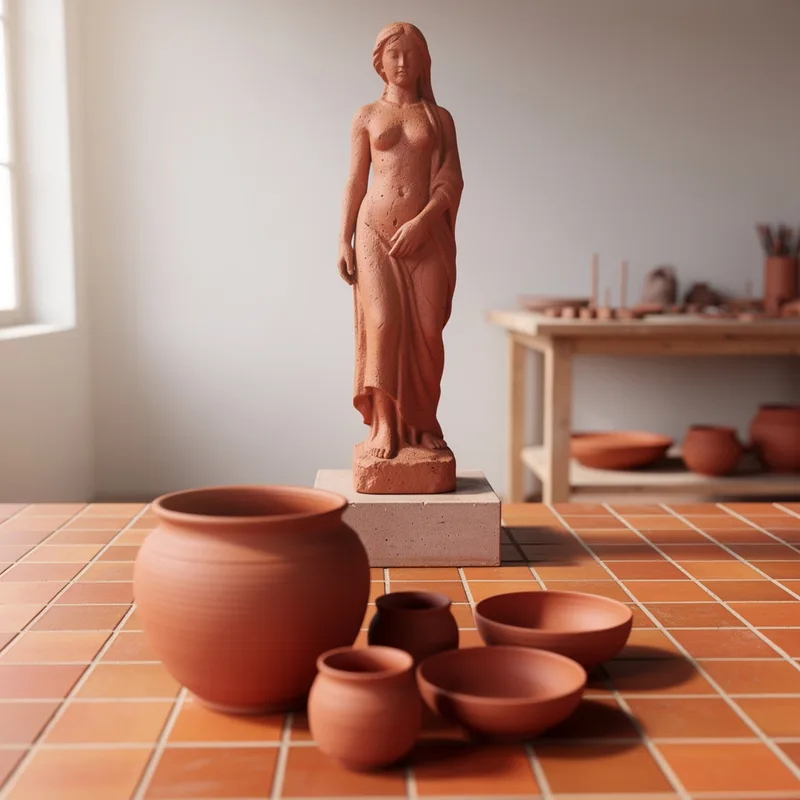
terra cotta
 3
5.4
3
5.4

- noun
- /ˌtɛrə ˈkɒtə/
- Besides garden statues, terra-cotta figurines became popular in the eighteenth century.
- terra cotta sculpture
- terra cotta roof
Examples
-
Do you not find the history of the terra cotta warriors to be fascinating?
-
A terra cotta planter is to the right of the front door.
Fiction book (1997) -
I remembered the patio lined with plants in terra-cotta pots.
Fiction book (1997) -
So wood, mud brick and Terra cotta were the materials used for this particular building.
-
On the way home, Claude drove the car through an African village famous for its terra cotta articles.
Fiction book (2001) -
Petunias wilted in a huge terra cotta pot each day at noon.
Fiction book (1996) -
Quinn knew right away that Ferguson was talking about the seven-thousand-strong army of terra-cotta soldiers discovered in an imperial mausoleum near the Chinese city.
Fiction book (1999) -
Then her eyes adjusted, and she saw the bulky terra-cotta pot overflowing with a leggy silver-green plant.
Fiction book (1997) -
Returning from planting geraniums in the huge terra-cotta pots on Theodora Shea's south-facing terrace.
Fiction book (1995) -
The garden was adorned with beautiful sculptures made of terra cotta that added warmth to the landscape.
Synonyms
 24
2.3
24
2.3
Objects made from clay and hardened by heat like pots and bowls
 3
6.6
3
6.6
Pottery made from clay and baked at low heat, often with a shiny layer
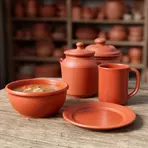
Pottery made from red clay and baked at low heat for everyday dishes
Surface Forms
Morphology
terra + cotta
The components 'terra' (earth) and 'cotta' (from Italian 'cooked'/'baked') combine compositionally to mean 'baked earth' or baked clay, which directly describes the brownish‑orange color. This is a transparent, loaned compound whose literal image maps clearly onto the color, so a B1 learner who knows the constituent meanings can readily infer the MWE's meaning.
Etymology
Terra cotta comes from the Italian words terra ('earth') and cotta ('cooked'), because potters shaped red clay and heated it until it became hard, brown-red pottery. That's why terra cotta means 'hard, baked clay' used for pots, tiles, and sculptures.