
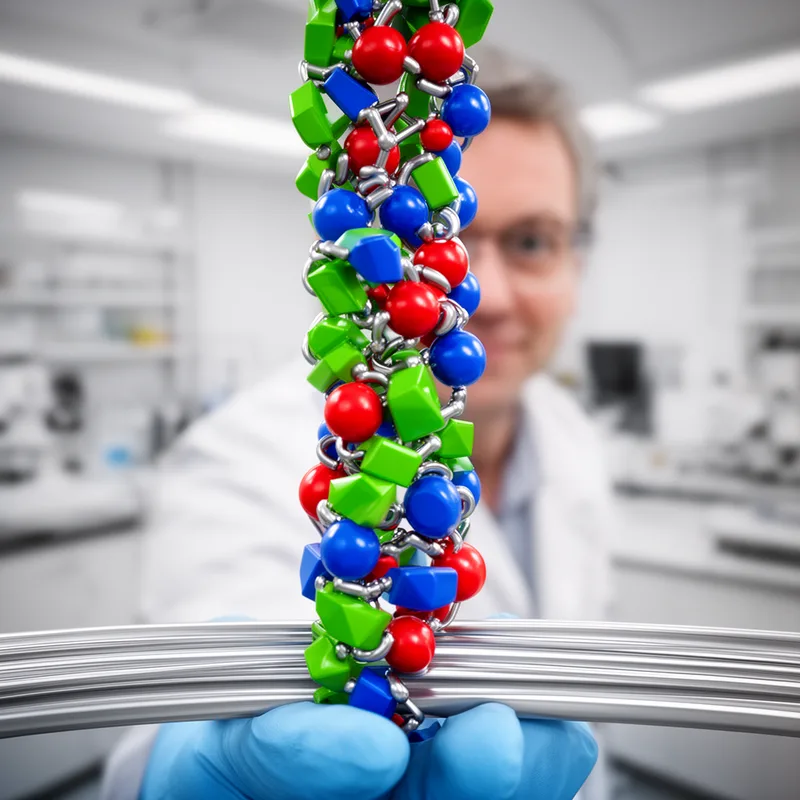
terpolymer
- noun
- /ˈtɜrˌpɒlɪmər/
- Specialized
- In the lab, we analyzed a terpolymer consisting of styrene, butadiene, and acrylonitrile for its unique properties.
Examples
-
A variety of copolymers and terpolymers containing NBIAH have been synthesized.
Academic text (2001) -
Table 1 summarizes dissolution or swelling rates in CD-26 of cycloolefin copolymer and terpolymer films baked at 150 degrees Celsius for 60 seconds.
Academic text (2001) -
One example was a terpolymer of NBIAH, NBTBE, and NB with pendant methanesulfonamide (NBMSN, Scheme III).
Academic text (2001) -
GRAPH: Figure 18; Dissolution rate of terpolymer of NBHFA, NBTBE, and SO2 in 0.21 N TMAH as a function of polymer composition.
Academic text (2001) -
One of the 193-nm resist systems is based on the NB-MA terpolymer involving acrylic acid as a third monomer in conjunction with the use of cholate derivatives.
Academic text (2001) -
It thus appears that the concentration of the fluoroalcohol unit in the terpolymer must be less than 45% for an unexposed resist film in order to provide minimum thinning in the industry-standard 0.26 N TMAH solution.
Academic text (2001) -
The NBMSN/NBIAH/NBTBE terpolymer (40/20/40) swelled at 87 Angstrom/s in LDD26W after baking at 130 Celsius for 60 s (Figure 14).
Academic text (2001) -
The terpolymer, made of three distinct monomers, provides enhanced strength and flexibility for various applications.
-
Researchers discovered that the new terpolymer improved the performance of the material in extreme temperatures.
How Complex


Surface Forms
Morphology
Etymology
Terpolymer comes from the parts ter- meaning 'three' and polymer meaning 'many parts', as you can see poly- in polyester and ter- like in 'triple'. So, a terpolymer is a material made by joining three different small parts into one long chain.