

terminal velocity
 1
6.3
1
6.3

- noun
- /ˈtɜrnəməl vəˈlɒsɪti/
- Specialized
- This he calls terminal velocity, the speed at which objects of equal mass all travel at the same speed.
- reach terminal velocity
Loading YouTube…
Watch on YouTubeBut basically, I that moment, before you know it, you're floating because you reach a terminal velocity.
- But basically, I that moment, before you know it, you're floating because you reach a terminal velocity.
Examples
-
And we measure the terminal velocity by measuring the time it takes to fall a known distance.
-
You can launch a ball downward at high speed, but the air will eventually slow it to its terminal velocity.
-
Once the balls reach terminal velocity, they experience the same.
-
One of the best ways to monitor the effects of air friction is to consider the terminal velocity of a falling object.
Academic text (1992) -
That block of ice reached terminal velocity very quickly, it left a sizable impact crater area, what's more, it stayed pretty much intact all the way down to impact.
-
While falling from 12,000 feet, at a terminal velocity of 160 miles per hour, will the ice stay in one piece, or will wind erosion and warming temperatures cause it to break up into a harmless blue rain?
-
He opens the chute below 10,000 feet, which is a normal range for skydivers; there, his velocity should be close to normal terminal velocity, which skydivers regularly experience.
Blog text (32) -
All objects, when falling through the air, have a terminal velocity that depends on their size, shape, and mass.
-
One of the best ways to monitor the effects of air friction is to consider the terminal velocity of a falling object.
Synonyms
 154
4.5
154
4.5
How fast something moves in a certain direction
 20
3.7
20
3.7
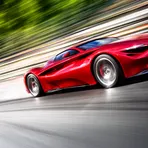
How fast a vehicle or person can move
Surface Forms
Morphology
The literal meanings of 'terminal' (final) and 'velocity' (speed/rate) combine to give the sense of a final or maximum speed, so a learner who knows the parts can partly predict a meaning about a limit on rate. However, the business/figurative use (maximum sustainable growth) requires a metaphorical mapping from physics to growth, which is not fully predictable for a B1 learner without exposure.
Etymology
Terminal velocity comes from the image of something falling and reaching its final speed. The word terminal means 'final' and velocity means 'speed', and when air pushes up and gravity pulls down the object stops getting faster and moves at a steady 'maximum speed'.