
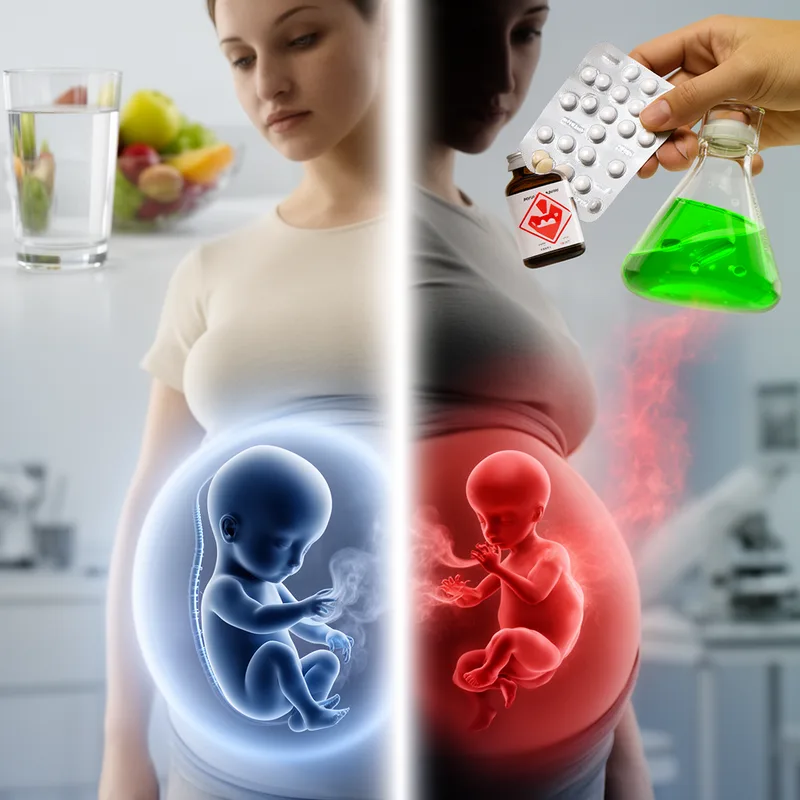
teratogenic


 1
9.9
- adjective
- /ˌtɛrəˈtoʊdʒənɪk/
- Specialized
- The drug thalidomide was infamous for its teratogenic effects, causing severe malformations in babies.
- teratogenic effects
Examples
-
In the early 1960s, the drug thalidomide, which was on the market in Europe for the treatment of pregnancy-related conditions, had teratogenic effects on humans.
Academic text (2018) -
High intakes of vitamin A during pregnancy have been found to be teratogenic.
Academic text (2012) -
In some animal species, especially monkeys, it has adverse reproductive effects and teratogenic effects.
Academic text (1993) -
Although experiments with animals have provided considerable information regarding the teratogenic effects of drugs, it is not always possible to extrapolate experimental findings from animals to humans.
Academic text (2003) -
It is essential to check that women of childbearing age are using a reliable method of contraception as it may be teratogenic.
Academic text (2012) -
Corticosteroids cross the placenta, and animal studies have suggested that these compounds are teratogenic when they are administered systemically, especially during the first two trimesters.
Academic text (2003) -
Teratogenic drug exposure around the time of conception and/or implantation (i.e., the first 2 weeks) is likely to result in spontaneous abortion.
Academic text (2003) -
As a growing number of environmental contaminants are recognized as teratogenic, a key issue is whether such exposures are associated with a global, undifferentiated pattern of cognitive impairment or whether exposure to each substance leads to a distinct profile of deficits based on its particular properties and mechanisms of action.
Academic text (2014) -
High intakes of vitamin A during pregnancy can be teratogenic and lead to birth defects.
-
Certain environmental chemicals have been identified as teratogenic, raising concerns for pregnant women.
Surface Forms
Morphology
teratogenic = teratogen (transparent) = terato + gen + ic
Formed by adding the adjectival suffix '-ic' to 'teratogen' (an agent causing malformations), producing a standard adjective meaning 'causing birth defects'.
Etymology
The word teratogenic comes from the Greek parts terato- 'monster' and -genic 'to produce', similar to the English word generate. So, something teratogenic is a substance that 'produces monsters' — in other words, it can cause abnormal development or birth defects.