
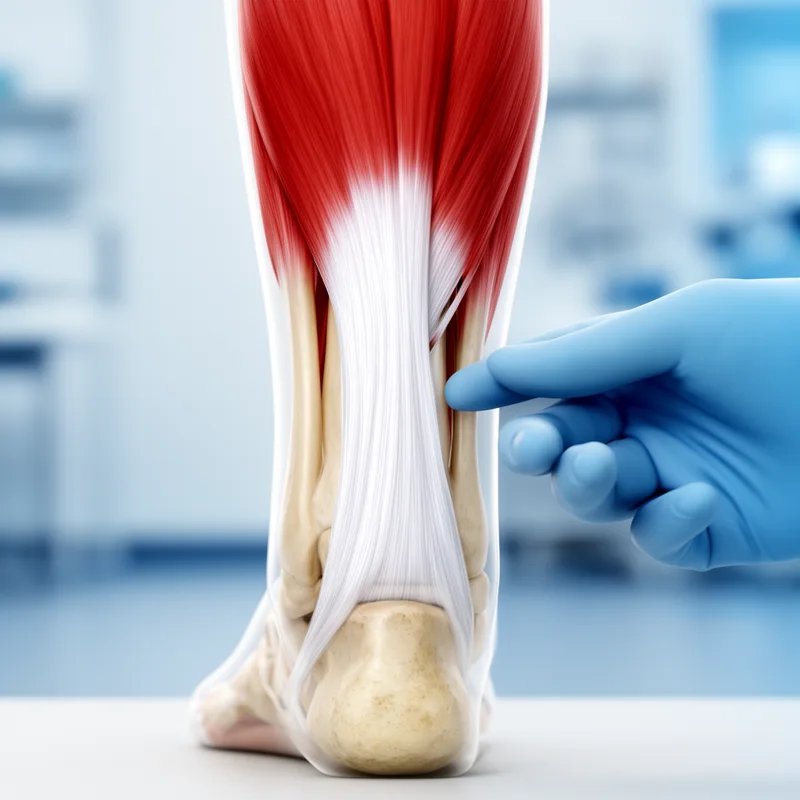
tendinous


 1
8.0
- adjective
- /ˈtɛndɪnəs/
- Specialized
- The direction, width, and number of layers of the tire card strips appear to restrain and modulate flexibility in various directions, thereby simulating fascial, muscular, and tendinous modulators in the living foot.
- tendinous repair
Examples
-
The purpose of the present narrative review is to describe the scientific evidence regarding the effects of TENS on tissue repair with respect to wound healing, the viability of skin flaps, and tendinous repair.
Academic text (2012) -
Responsiveness to the sexual pictures was measured by modulation of spinal tendinous (T) reflexes.
Academic text (2004) -
NBC had a story not too long ago on the introduction of stem cells from a horse back into the horse to try to treat a ligament or a tendinous injury.
-
The radial half of the FCR is used, leaving the tendinous insertion on the base of the second metacarpal (1, 2).
Academic text (2011) -
Thirty articles on tissue repair were found, 14 of which reported the effects of TENS in wound healing, 14 on skin flap survival, and two on tendinous repair.
Academic text (2012) -
Steege noted that model results were sensitive to tissue stiffness and to underlying tendinous and bony structures of the residual limb.
Academic text (1993) -
The doctor explained that the injury was due to a tendinous structure that had become inflamed.
-
After the surgery, the athlete was careful to strengthen the tendinous connections in his leg.
-
The anatomist described the tendinous tissue as essential for connecting muscles to bones.
Surface Forms
Morphology
Etymology
The word tendinous comes from tendon, which comes from the Latin root tendere meaning 'to stretch'. Think of a tendon as a tight, stretchy cord that joins muscle to bone, so tendinous means 'like a tendon' or 'having those strong, stretched cords'.