
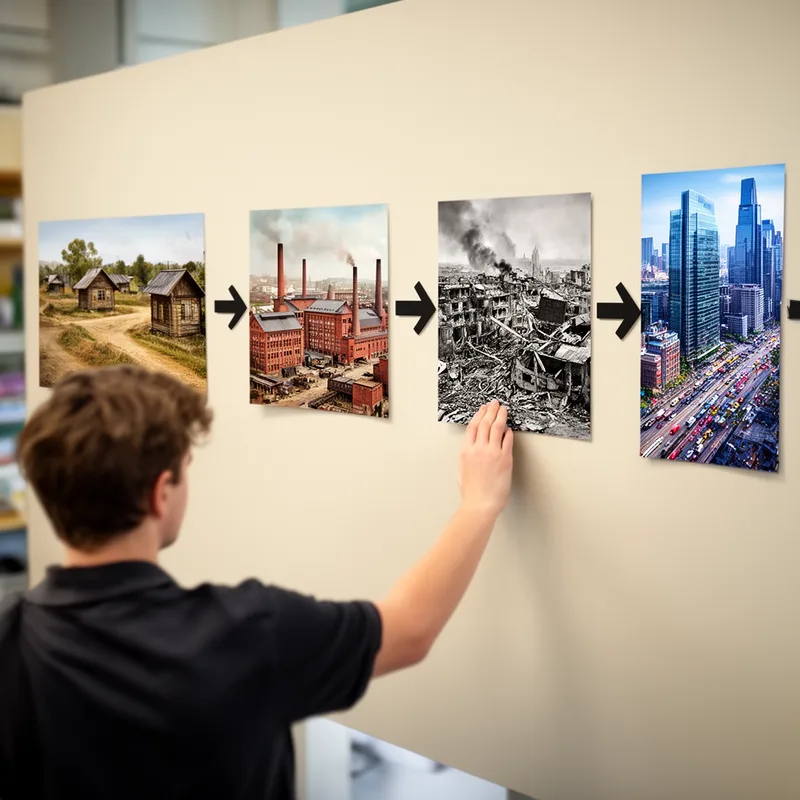
temporalization
- noun
- /ˌtɛmpəˈrælɪˌzeɪʃən/
- Specialized
- The temporalization of events in the story helped the audience understand the timeline.
Examples
-
The poem does not literally tell a story, but the reader extracts characters and events out of images through a process of individuation and temporalization.
Academic text (1992) -
The article addresses the main problem facing the application of PWT to narrative semantics: the temporalization of the model.
Academic text (1992) -
This temporalization creates a paradox.
Academic text (1992) -
It is the building without its ornament or, given the temporalization of the pair, before its ornament is added, a process that must be reversed in the eye of the viewer.
Academic text (1998) -
As a result of the intimate and obligatory union of space and time, the terms "temporalization of space" and "spatialization of time" have surfaced in scientific, philosophical, and literary studies.
Academic text (1994) -
In other words, structure/ornament does more than accommodate historicized scenarios; it a priori obliges them. The inherent temporalization of the structure/ornament figure not only demands that the building be seen in strictly binary terms, it also functions as a compelling narrative device.
Academic text (1998) -
In philosophy, temporalization is key to discussing how our perception of time influences meaning.
-
The temporalization process in this study reveals how historical events shape contemporary experiences.
Synonyms


 1
9.8
Recording time and events in order using calendars and clocks
 1
7.0
The order of events in time
Surface Forms
Morphology
temporalization = temporalize (transparent) = temporal + ize + ation
Formed by a standard verb-to-noun nominalization from 'temporalize' with the productive suffix '-ation', so the meaning is predictable from the base.
Etymology
The word temporalization comes from temporal, which goes back to the old Latin word tempus meaning 'time', and the ending -ization meaning 'making' or 'process'. So, temporalization is the process of 'placing or defining something in time', which is why it means arranging or describing things by their time or order.