
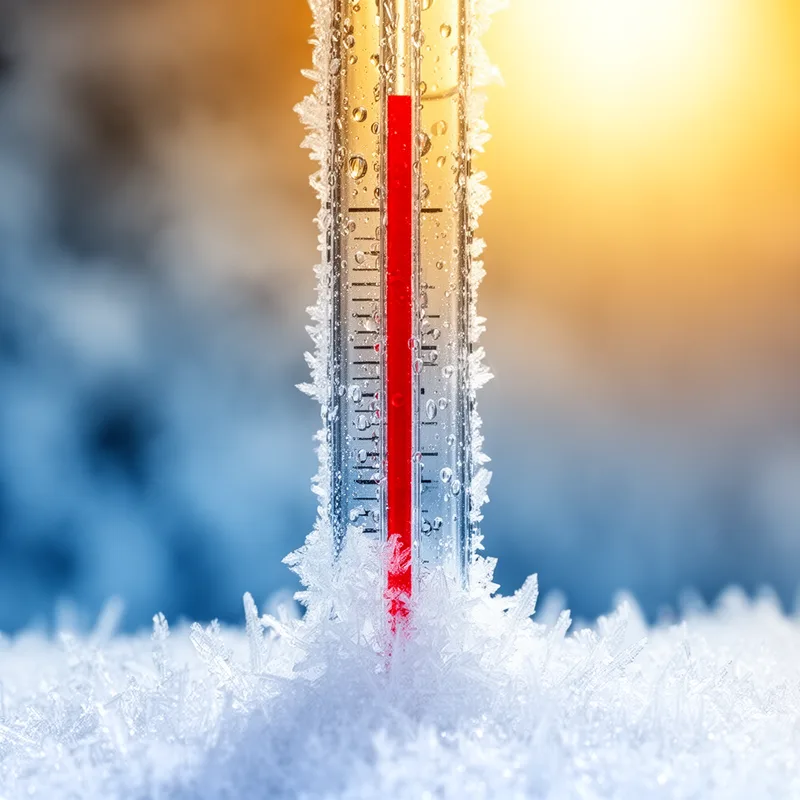
temperature change
 9
2.7
9
2.7

- noun
- /ˈtɛmpərətʃər ʧeɪndʒ/
- The same effect, on a global scale, is a factor in keeping seasonal temperature changes gradual rather than abrupt.
- rapid temperature change
- surface temperature change
- global temperature change
Loading YouTube…
Watch on YouTubeAnd then outside of the spectrum that he was recording, there was a temperature change.
- And then outside of the spectrum that he was recording, there was a temperature change.
- But without the moon, it would be much larger than that, and that would make for much more severe seasonal temperature changes.
- There's still scenarios where we could have high temperature change or large climate change for reasons independent of of carbon dioxide emissions.
- Then we have humidity change, temperature change, and then finally custodial neglect.
- And, and that's, that's what worries me because it's all been put into the sort of, you know, sea level rise, temperature changes.
Examples
-
Analyser machines, while robust, are very sensitive to temperature changes and should be kept in as constant an environment as possible.
Academic text (2011) -
Now we can even monitor temperature changes.
Academic text (2007) -
But now we can truly see it on that cellular level when it comes to temperature changes in the body.
-
- I notice a definite temperature change.
-
The data you are citing is temperature change data, not temperature data.
Blog text (2) -
Shown in blue are the estimates of the temperature change based on well-understood feedback processes.
Academic text (2012) -
Two nematode species reacted quite differently to a recent period of documented temperature change.
Academic text (2008) -
On the plant surface, bacteria face drying out (desiccation) and temperature changes, Loper says.
Academic text (1998) -
The tiny marine plants are sensitive to temperature change, making them vulnerable to shifts in their environment.
-
Small glaciers in this region tend to respond rapidly to temperature change as the climate warms.
Surface Forms
Morphology
The meaning is directly and transparently derived from combining 'temperature' (level of heat or cold) with 'change' (a difference or variation), i.e. an increase or decrease in temperature. This is a straightforward compositional noun-noun phrase and is cross-linguistically common, so a B1 learner who knows the constituents will readily understand it.
Etymology
Temperature change shows a simple picture: the temperature (how 'hot' or 'cold' something is) goes up or down, like the red line in a thermometer moving. So temperature change means a rise or fall in heat that can affect things, for example making glass crack if it happens quickly.