
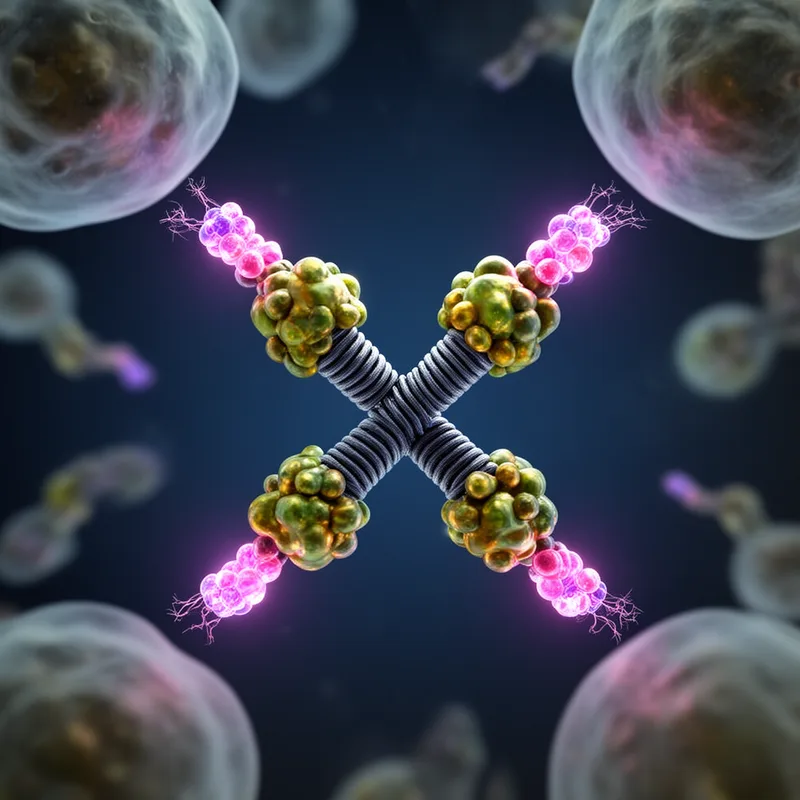
telomerase
 2
9.7

- noun
- /tɪˈloʊməreɪs/
- Specialized
- Telomerase is simply an enzyme that performs a function: helping cells to divide.
- telomerase-producing cells
- telomeres and active telomerase
- telomerase activity
Loading YouTube…
Watch on YouTubeThe catch is that cancer cells also use telomerase on the way to immortality.
- The catch is that cancer cells also use telomerase on the way to immortality.
Examples
-
The results of adding telomerase to these cells were striking—the cells regained their proliferative potential, ignoring the Hayflick limits.
Academic text (1998) -
The catch is that cancer cells also use telomerase on the way to immortality.
-
Measuring telomerase levels, for example, can be used to track cancer progression.
Academic text (1998) -
Old cells, like mine, can be made young again by reactivating the telomerase gene.
Blog text (20) -
So do most cancer cells, which are notorious for having long telomeres and active telomerase.
Academic text (1998) -
Overall, the lack of telomerase compromised chromosome stability and the integrity of cells that normally divide often.
Academic text (1998) -
To keep telomeres big enough to protect their chromosomes, telomerases keep adding more DNA to them.
Blog text (26) -
Because telomerase is critical to maintaining cellular stability and cell division, altering this enzyme's activity may have varied uses.
Academic text (1998) -
Meditation seems to affect the production of the enzyme telomerase, which in turn builds telomeres, the endpoints of each chromosome.
Blog text (15) -
The enzyme telomerase adds telomeres to the ends of chromosomes, which helps maintain genetic stability after cell division.
Surface Forms
Morphology
Etymology
Telomerase comes from telomere and the ending -ase. Telomere comes from Greek telos 'end' and meros 'part', so it means 'end part', and -ase marks an enzyme. So telomerase is an enzyme that adds protective pieces to the 'ends' of chromosomes, which is why it keeps chromosome ends from getting shorter.