
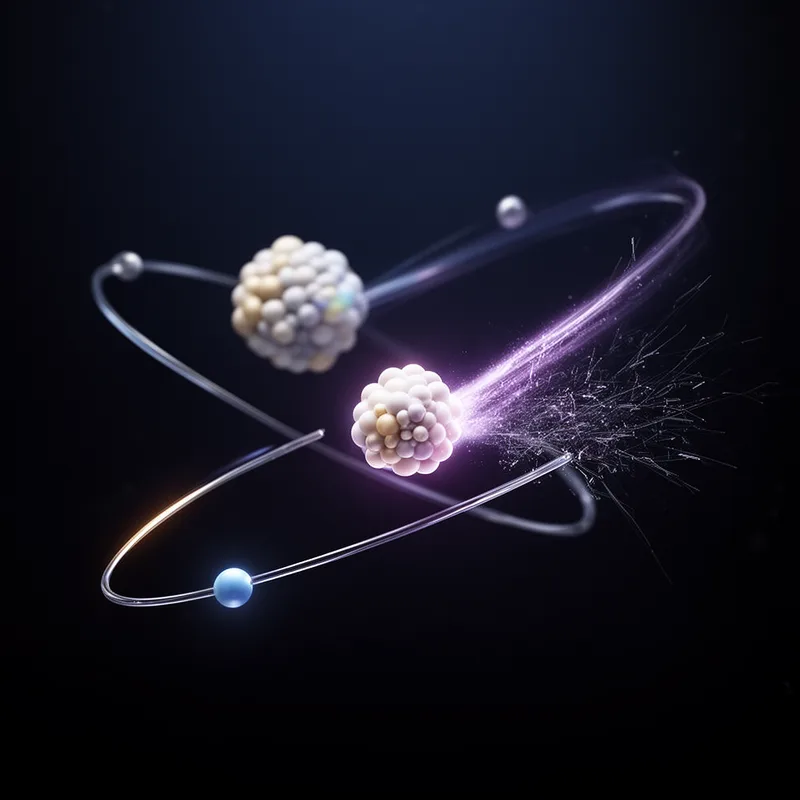
tauon
- noun
- /ˈtɔːɒn/
- Specialized
- The discovery of the tauon provided new insight into the structure of matter.
Examples
-
The tauon is a fundamental particle in the Standard Model.
-
Researchers accelerated particles to high energies to observe the decay of a tauon.
-
Unlike the electron, the tauon has a much shorter lifetime before it decays.
-
Scientists discovered the tauons emitted during the collision.
-
The physicist explained that the tauon is a lepton with a mass significantly greater than that of an electron.
-
In particle accelerators, researchers often study the behavior of the tauon due to its unique properties.
-
Unlike the electron, the tauon has a much shorter lifespan and decays into other particles quickly.
Synonyms
A heavy, short-lived tiny part of matter like an electron but much heavier
Compounds

- Specialized
A very small particle related to the tau particle that hardly interacts with matter
Surface Forms
Morphology
Etymology
Tauon is made from the Greek letter tau and the particle ending -on, the same ending you find in electron. Here tau marks the 'third' charged tiny particle in the family, so the name helps you remember that a tauon is a heavy charged particle, heavier than the electron and the muon.

