

taste perception
- noun
- /teɪst pərˈsɛpʃən/
- Specialized
- The taste perception of chocolate can vary greatly among individuals.
Examples
-
Researchers are studying how genetics influence taste perception and dietary choices.
-
Children's taste perception can change as they grow older, making them more open to new foods.
-
Smoking can dull your taste perception, making foods seem less flavorful.
-
How does taste perception change with age?
-
The research focused on how environmental factors can impact taste perception in children.
-
Chemicals in certain foods can significantly change your taste perception of sweetness or bitterness.
-
The way we experience food is closely related to our taste perception.
Synonyms

 420
1.0
420
1.0

A sense in the mouth that notices flavors like sweet and bitter
 3
2.7
3
2.7
Ability to notice sweet, sour, bitter and salty flavors in your mouth
 1
3.8
1
3.8
A feeling in the mouth when the tongue notices flavor


 1
9.9
1
9.9
A sense that lets you taste and tell different flavors like sweet or bitter

The sense of taste when chemicals from food touch your tongue

The sense of taste when taste buds detect chemicals in the mouth
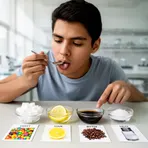
The ability to notice and name tastes like sweet, sour, bitter, and salty
Surface Forms
Morphology
The meaning 'the process by which taste buds detect and interpret flavors' is directly and compositionally derived from 'taste' (sensory ability to perceive flavors) combined with 'perception' (the process of becoming aware or interpreting sensory input). This noun+noun combination follows a common, transparent semantic pattern found across languages, so a B1 learner who knows both constituents would readily understand the MWE.
Etymology
The noun taste perception comes from a simple image: tiny taste parts on your tongue ('taste buds') notice food and your mind (perception) understands the 'flavors'. So, taste perception means the way your senses and brain detect and interpret the 'flavors' of what you eat.