
tariqa


 1
9.9
- noun
- /tɑːˈriːkə/
- Specialized
- Sufism is structured into spiritual organizations, tariqas ('spiritual paths') which have scattered over the Muslim world to spread the teachings of the spiritual master.
Examples
-
The Holiya is the great annual gathering of disciples at the place of origin of the tariqa, where they assemble around their leader, the present sheikh.
Academic text (2008) -
Al-Mirghani eventually modified the traditions of the tariqa, emphasizing the "sanctity" of his own family's leadership and consequently firmly centralizing the hierarchical structure of the order.
Academic text (1990) -
They play a key role within each tariqa with its individual devotional rituals.
Academic text (2008) -
One of the most well-known in Sudan is Sit Maryam, granddaughter of al-Mirghani, the founder of the Khatmiyya Tariqa.
Academic text (2008) -
Increasingly, the center-fight parties have also used Islamic discourse and established institutional links with the tariqas (the religious brotherhoods).
Academic text (2005) -
The Shadhilliyya tariqa is generally believed to have been brought from the Maghreb in 1445 by Sherif Hamad Abu Dunanan, who in that year settled in the northeast district of Berber.
Academic text (1990) -
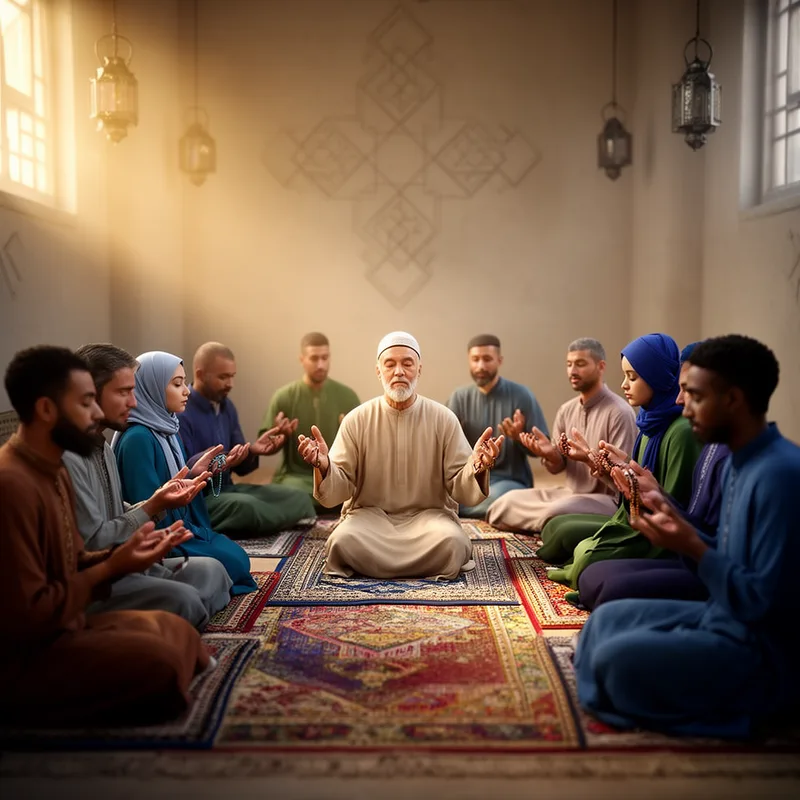
The members of the tariqa follow specific rituals to deepen their spiritual connection.
-
Each tariqa has its unique teachings that help guide followers on their spiritual path.
-
To join a tariqa, an individual must often undergo a series of initiation rituals.
Surface Forms
Etymology
Tariqa comes from the Arabic word tarīqa, which means 'path' or 'way', and in Sufism it is used for a spiritual 'path' or order that guides people with shared teachings and practices.