

tapir
 3
8.2
3
8.2

- noun
- /ˈteɪpɪr/
- An itinerant tapir went out of its way to avoid us.
- tapir and jaguar
- tapirs and peccaries
- tapirs and monkeys
Loading YouTube…
Watch on YouTubeSo those are all related, which is pretty wild to think about rhinos, tapirs and say zebras or horses.
- So those are all related, which is pretty wild to think about rhinos, tapirs and say zebras or horses.
Examples
-
Visitors to the zoo were delighted to see a tapir swimming gracefully in its habitat.
-
Now here we have a Brazilian tapir.
-
I saw a tapir, was shocked by its enormity, its sleek fur, its eyes staring back.
Blog text (2) -
The animals they hunted included tapirs, mammoths, mastodons, and giant sloths.
Academic text (1995) -
Mammals such as tapirs and peccaries rely on the palm's date-size purple-black fruits for food.
Academic text (2010) -
About two hundred yards out, he could see a lone tapir placidly munching vegetation, standing shoulder-deep in watery muck.
Fiction book (1993) -
In the dense jungles of Central America, the tapir forages for leaves and fruits with its flexible snout.
-
The tapir, known for its stout body and unique snout, is often spotted near rivers in tropical regions.
Compounds
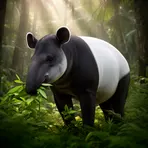
A large mammal that eats plants with black and white skin living in forests in Malaysia and Sumatra


- Specialized
A large mammal from South and Central America with a short trunk-like nose used to eat plants
Surface Forms
Etymology
The word tapir comes from a Tupi word tapi'ira that people in Brazil used to name the animal. So English kept that local name, and tapir today means the large, mostly active at night forest mammal with a long, flexible 'nose'.