
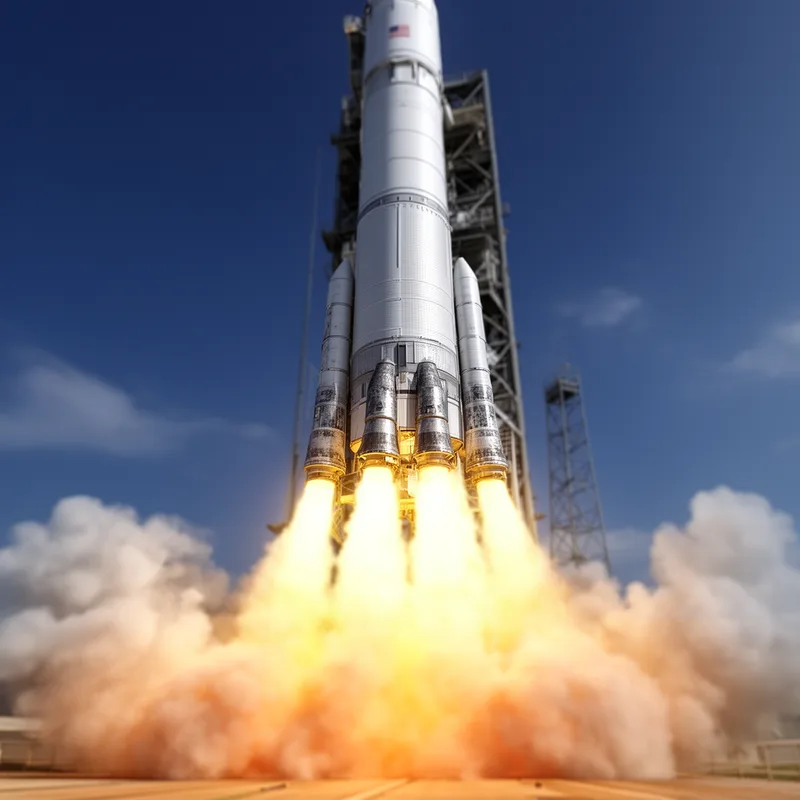
takeoff booster
- noun
- /ˈteɪkˌɔf ˈbuːstər/
- Specialized
- Once the takeoff booster burns out, the second stage ignites to propel the rocket further.
Examples
-
The takeoff booster separates after the rocket has cleared the launch pad.
-
The takeoff booster ignited successfully.
-
Engineers inspected the takeoff booster for signs of wear before the mission.
-
NASA's takeoff boosters are crucial for space missions.
-
Engineers inspected the takeoff booster for signs of wear before the mission.
-
Once the takeoff booster burns out, the second stage ignites to propel the rocket further.
-
NASA's takeoff booster plays a key role in launching spacecraft into orbit.
Synonyms

 30
5.8
30
5.8

The first part of a rocket that gives the strong push to lift it off
 1
5.3
1
5.3
A large engine that gives a spacecraft its first push and falls off when empty

The first part of a rocket that gives a strong push at launch

A powerful first part of a space vehicle that lifts it off the ground
Surface Forms
Morphology
The meaning is directly compositional: 'takeoff' (the moment of liftoff) modifies 'booster' (a launch stage providing thrust), so together they denote the booster used at takeoff. This noun–noun compound follows a common English pattern and is readily inferable by a B1 learner who knows both constituent words.
Etymology
The term takeoff booster comes from rockets; think of an extra engine attached to the rocket that gives a big, early push. The booster drops away when it is done, so takeoff booster means the takeoff part that gives the 'first push' to help the rocket lift off.