
to take orders


 1
8.3
1
8.3
- phrasal verb
- Formal
- He was so accustomed to these things that he took orders from the minister as if he were in the military, ready to fulfill every command.
Examples
-
WHEN HE TAKES ORDERS IN A FEW WEEKS, HE WILL BEGIN, IF I'M NOT MISTAKEN, HIS OWN SERVICES.
-
She said the truth was that the reason why God saved Lot was because of how well Lot took orders.
Fiction book (1997) -
I'm bound only to take orders from the Roman governor when he arrives.
-
She only took orders from someone she respected, and she could respect none of these managers.
Blog text (6) -
Either he had taken orders for the priesthood (all the sisters were Methodists), or he had declared himself a homosexual, or perhaps he had run off to sea.
Fiction book (1993) -
BUT IT IS TO BE EDMUND'S PARSONAGE WHEN HE TAKES ORDERS.
-
For sure, after 1954, the late President Eisenhower, suffering from early dementia, and the late pro-commie Earl Warren of the Supreme Court took orders from a specific nest of international financial gangsterism.
Blog text (3) -
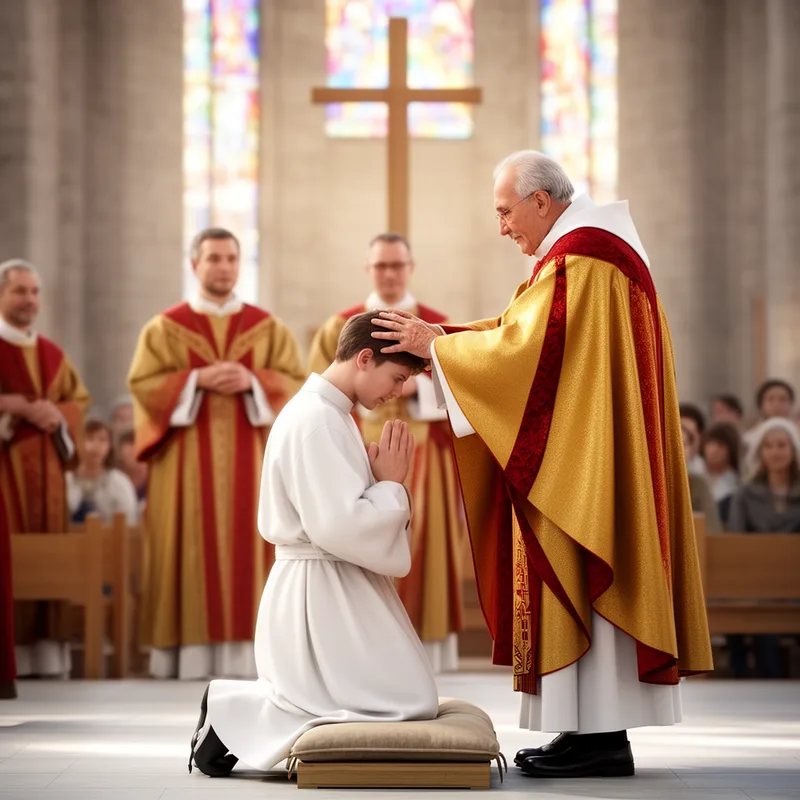
After years of study, he finally took orders and became a priest in his local church.
-
Many young men feel called to take orders and serve their communities as ministers.
-
Before he took orders, he spent a year in training to prepare for his new role as a priest.
Surface Forms
Morphology
The meaning 'to listen to and record customers' requests' is directly derivable from combining 'take' (to receive/accept) with 'order' (a customer's request). The construction 'take + order' follows a common, compositional English pattern (receive an order) and is cross-linguistically transparent, so a B1 learner who knows the parts will understand it.
Etymology
Take orders comes from the old church practice of joining a religious order; to take the order was to promise to follow its rules and so become a priest or monk. So it came to mean 'to be ordained'.