
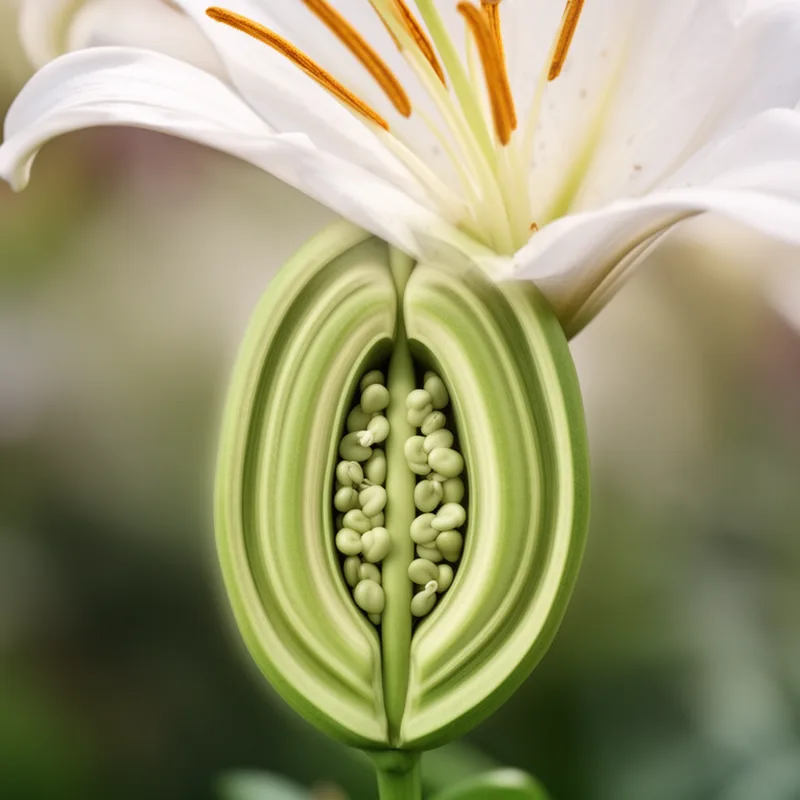
syncarpous
- adjective
- /sɪnˈkɑːrpəs/
- Specialized
- In lilies, the ovary is described as syncarpous because its carpels are fused.
Examples
-
Is the tomato plant syncarpous or apocarpous?
-
Botanists study whether a plant's ovary is syncarpous or apocarpous to classify its family.
-
A syncarpous ovary can affect the development of the plant's fruit.
-
The syncarpous ovary is essential for the development of certain fruits.
-
In lilies, the ovary is described as syncarpous because its carpels are fused.
-
Botanists study whether a plant's ovary is syncarpous or apocarpous to classify its family.
-
A syncarpous ovary can affect the development of the plant's fruit.
Antonyms
- Specialized
Having carpels that are separate from one another, as in roses or buttercups
Surface Forms
Morphology
syncarpous = syncarp (opaque) = syn + carp + ous
The immediate base 'syncarp' and its parts are specialized botanical terms (Greek combining forms), so the relation to everyday vocabulary is not clear to average learners.
Etymology
Syncarpous comes from the Greek parts syn- 'together' and carp- from karpos 'fruit', and a carpel is the part of a flower that makes seeds. So, syncarpous means the flower's carpels are joined or fused together.

